Friday, October 30, 2009
Wrapping up 09 Season
Join the Rucksack Revolution!

Did you know that every year in Patagonia, over half a million fuel canisters per season end up as landfill?
Erratic Rock, a Guide Service & Outfitter Partner of Leave No Trace, is on a mission to not only bring awareness to this fact, but to do something about it. Their new campaign, along with the help of partners like the American Alpine Club, MSR, Outdoor Research and Leave No Trace, is launching this season to facilitate the ease of recycling fuel canisters. The result: climbers and other adventurers to these beautiful Patagonian areas are part of the solution to keeping Patagonia pristine.
Leave No Trace, as an education program that focuses on what people can do to minimize their impact in the outdoors, is proud to work with Erratic Rock and support their efforts to educate and empower individuals to these areas to be responsible stewards and leaders in the climbing community.
Thursday, October 29, 2009
Really???

From the Associated Press: updated 12:00 p.m. MT, Sun., Oct . 25, 2009
FRESNO, Calif. - Last month two men and their teenage sons tackled one of the world's most unforgiving summertime hikes: the Grand Canyon's parched and searing Royal Arch Loop. Along with bedrolls and freeze-dried food, the inexperienced backpackers carried a personal locator beacon — just in case.
In the span of three days, the group pushed the panic button three times, mobilizing helicopters for dangerous, lifesaving rescues inside the steep canyon walls.
What was that emergency? The water they had found to quench their thirst "tasted salty."
Read the full story here.
Webelos Woods “Delivering the Promise”, Oct 2-4 2009 at Double V Scout Ranch Tucson Arizona
(from Tanya) I was thrilled to head out to the Double V Scout Ranch for a morning event at the Webelos Woods. For one weekend, the young men and women get to experience what scouting has to offer them. Young women!?! Yes, the Webelos Woods has added two new programs the Junior and Cadette Girl Scouts from the Sahuaro Girl Scout Council.
Wednesday, October 28, 2009
The Future of Bats
Tuesday, October 27, 2009
Impromptu Awareness Workshop
Over the weekend we headed to Malibu Creek State Park for an event sponsored by Subaru. The evening before the event we showed up at the park's campground in hopes of finding a place to camp. As we drove around the campground loop we noticed that we seemed to be drawing more attention than usual (if you've ever seen the Leave No Trace Subaru, then you know it has potential to draw a modest amount of attention). As we commented to each other about all the staring, one camper waved us down for a quick photo (of the Subaru, not us). We pulled over and jumped out to chat while several people began photographing the car. As we chatted to the photographers we discovered that they were all part of the same recreation class at a local university. We also found out that this was their first camping trip as a class and that they had recently taken a test that focused on Leave No Trace...talk about perfect timing!
We got the whole group to take the Bigfoot Challenge! What a great group and the perfect opportunity for some impromptu Leave No Trace talk.
If you are interested in setting up an Awareness Workshop with the Subaru/Leave No Trace Traveling Trainers for the 2010 season (and don't want to take the chance that we'll just happen to show up at the perfect time) please submit an online request.
My Week in the Wild Kingdom

This five-foot-long sea turtle scooted past me on the shore of Ho’okepa, a popular surf spot, while I was visiting Maui last week. A few days later, my son and husband witnessed a black bear sleeping in a pine tree two blocks from our home in central Boulder, Colorado. This morning when I opened the front door to walk the dog, a small, red fox glared at me while it was trotting past my driveway. A minute later, four deer in the neighbor’s yard merely glanced up as we passed.
These wildlife encounters are fascinating and exhilarating but also sad and disturbing. Though it doesn’t get much more than Jacque Cousteau-like than having a giant sea turtle crawl past your beach towel, the situation did not fare well for the turtle. She made it about 25 feet onto shore, and I imagine she was considering laying eggs. She hung out for well over an hour but the inevitability of ooglers finally became too cumulative and too close and she suddenly turned and scampered back into the ocean.
As we populate, build and recreate it may be nearly impossible to stop this progression, though we should always remember to Respect Wildlife:
-Observe wildlife from a distance. Do not follow or approach them.
-Never feed animals. Feeding wildlife damages their health, alters natural behaviors, and exposes them to predators and other dangers.
-Protect wildlife and your food by storing rations and trash securely.
-Control pets at all times, or leave them at home.
-Avoid wildlife during sensitive times: mating, nesting, raising young, or winter.
Monday, October 26, 2009
National Park Service's Leave No Trace DVD Now Available

Presented by the National Park Service, this video is an inspiring testimony of individuals who love the land. It introduces the ideas and principles of Leave No Trace and the importance of taking a personal role in preserving the outdoor experience for future generations. Running time is 9:30. Under special agreement with the National Park Service, we are able to distribute this video. You can find them in our online store.
Sunday, October 25, 2009
350 at The North Face Endurance Challenge
Friday, October 23, 2009
Thursday, October 22, 2009
What To Do With Doggy Doo
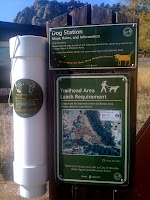
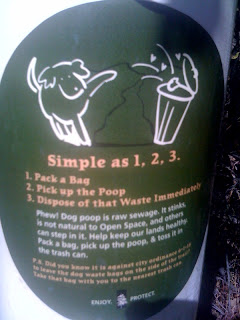
Here in Boulder, the City of Boulder Mountain Parks and Open Space tries a number of methods on the trails that they manage. One is signage:

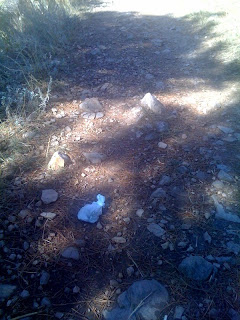
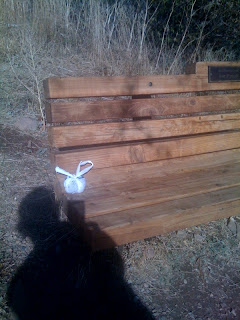
While hiking, I didn't see any evidence of poop directly on the trail, but I can't say people were totally adhereing to what the city was asking.
Nope:

Wednesday, October 21, 2009
Partnership Highlight: Wilderness Scotland

Wilderness Scotland is a registered partner of the Leave No Trace Centre, and their Director of Training Myles Farnbank, is a graduate of the Master Educator course (one of only 2 people in Scotland). The philosophy of Leave No Trace is at the core of their guiding principles - belief that education is the best means to protect the natural world from recreational impacts while helping maintain access for recreation and enjoyment. Through subtle education their clients learn about the need to minimize their impact, dispose of waste properly, and respect the wildlife among other things. Wilderness Scotland hopes that these principles will make a lasting impression on their clients, who will hopefully pass on what they have learnt to others.

Over the years they have won several awards which are a testament to their green credentials, they are the only adventure travel company in Scotland to hold the Green Tourism Gold Award. In 2009, they were awarded 5 Star Responsible Tourism status, which is the highest level by Association of Independent Tour Operators (AITO).
www.wildernessscotland.com 0131 625 6635
Tuesday, October 20, 2009
GSUSA Trainer Course in Mississippi
There Must Be 350 Ways to...Reduce Your Impact
Our Traveling Trainer Team East recently emailed us about 350.0rg, a grassroots organization dedicated to reducing climate change.
- Walk 3.50 miles instead of driving that distance.
- Turn off your computer (and or other electronic devices) for 3.5 hours.
- Recycle 35.0 plastic bottles.
- Pledge to use alternative transportation 35 days/year.
Monday, October 19, 2009
Bears, bears everywhere...

October is a great month in Colorado. The air is cool, the leaves are changing, the fly fishing can be stellar and bears are on the move. I recently hiked into a little known creek near the Wyoming border to go for some big trout I'd heard stories about. As we left the trailhead, you could immediately tell this place was wild. Really wild. I've spent a lot of time in the woods in my 35+ years and I'd never seen the amount or size of bear scat (almost as big as my fly reel) that I saw on this day.

Needless to say, all senses were on high alert. In addition to the bear sign, there was a disconcerting amount of mountain lion sign as well. Scat, tracks, scratches, you name it. It has been some time since I felt that I was in such a wild place in Colorado. It was wonderful and unnerving all at the same time.
After a recent trip to the Tetons, I started carrying bear spray when fishing the wilds of Colorado, especially when I'm fishing by myself. It gives me a realistic way to defend myself in the event of a negative bear encounter as well as makes me feel a little less like a potential meal for a hungry bruin.

That brings me to a few points about being safe in bear country:
Bears, both black and grizzly, are most dangerous when surprised or threatened. Therefore, the first step to peaceful coexistence is to avoid an unexpected encounter. Make noise when you are traveling in bear country, especially in spots where visibility is limited by vegetation. Travel in groups of three or more and stay close together. Watch for bear sign—tracks, the smell of carrion, clawed trees, etc. If you smell a carcass, go out of your way to avoid it. Be particularly wary of a female with cubs. You don't want to come between mama bear and her babies, or any bear and its dinner.
When you camp in bear country, separate your cooking area from the place you plan to sleep by at least 100 yards. If possible, cook close to rivers where the smell of your pan-fried fish will be carried away by winds that move up and down valleys. Concentrate all odors in the cooking area. Do not bring food back to your tent. In some cases, you may even consider storing the clothes you cook in with food and other odorous items. Anything that smells should either be hung up overnight or stored in a bear-proof container. This includes toothpaste, soap and bug repellant.
Hang food from tree limbs 12 feet off the ground, 6 feet from the tree’s trunk, and 6 feet below the supporting limb, or store it in specially designed bear-resistant canisters or on-site lockers. Canisters are available for rent and sale at sporting goods suppliers and some land management agencies. Used properly, they ensure a good night’s sleep for you and a natural diet for bears. Hanging food can be tricky, so practice hanging techniques before venturing into the backcountry and allow yourself plenty of time before dark to get set up. Check with land managers about specific food storage requirements for the area you are visiting. The various national forests and parks in the Rocky Mountains have different regulations. Methods appropriate for one area may not be allowed in another.
Around camp be extra meticulous with food scraps and wash water—or anything that smells. Avoid creating leftovers because cooked food has a stronger scent than dried pasta, uncooked oatmeal or freeze-dried beef stroganoff in a sealed-foil package. Food scraps should be double-bagged, stored with your food and carried out of the mountains. Leave a clean campsite so that you don't inadvertently endanger others who come behind you.
Disposing of wastewater in bear country is tricky. Once again, your main goal is to keep odors out of camp. If you are camped by a large volume river—at least 10 feet wide with substantial depth—you can pour strained wash water directly into the river to help disperse any odor. If you are not by a river, consider digging a small hole and sumping your wastewater. This practice concentrates odors in one safe location well away from your camp, however, animals may be attracted to the smell and dig up the hole in search of food. For this reason, sumping is not recommended in areas of high use. In these places, you should walk well away from camp and scatter your wastewater.
There's nothing quite like spending time in the woods where large predators live. There's just something almost indescribable abut it. It can quickly make one realize how we, humans, are just one part of the big picture. It's a pretty amazing feeling.
Sunday, October 18, 2009
Geocaching 101: Part Deux
This morning we said our goodbyes to our recent travel companion, Wolfgang Von Pitterpat. As promised in our earlier post Geocaching 101…We Need Your Help, we dropped Wolfgang off at the first suggested location, the Travel Bug Hotel (N 36° 30.306 W 104° 55.241) in Cimarron, New Mexico. Before dropping Wolfgang off we tagged him with our newest ethics reference card on geocaching*. This being our first adventure into the world of geocaching, we weren’t sure what to expect. Turns out we had a lot of fun and finally took the time to learn how to use the GPS unit that has been sitting in our glove box for over a year! Here is a brief retrospective of our geocaching adventure...enjoy!
We found Wolfgang at the top of Boundary Peak in Nevada and decided to make him an honorary Traveling Trainer!
Wolfgang perched on the Subaru on our way to Cimarron.
JD and Wolfgang figuring out how to use our GPS unit.
We found the "Travel Bug Hotel" right next to the historic St. James Hotel, which is supposedly haunted!
*No Travel Bugs were harmed in the tagging process.
Friday, October 16, 2009
Boulder County Open Space debates shifting to fee-based recreation.

There's debate ensuing in Leave No Trace's hometown of Boulder, Colorado. The subject: whether or not to begin a pilot program that would charge non-residents to use Open Space trails.
Boulder County's Parks and Open Space program was initiated in the mid-1960s by citizens interested in preserving land from rapid development. Since then, the city has spent $208 million to purchase more than 45,000 acres of open space in and around Boulder. Over 65% of land in Boulder County is protected from development by Boulder County and federal, state, and local agencies, either through conservation easements or land ownership.
Today, Boulder County still has more than 5,800 acres left in its master plan -- at an estimated cost of about $100 million.
To generate the funding needed for the rest of this land acquisition, another model program is being discussed at the city level: to begin charging a fee for non-Boulder County residents who use city-owned trails.
With a high influx of recreational users coming from the surrounding Denver metro areas, the program could be successfully tested at certain trailheads first where a high preponderance of these users visit.
On the flip side, many of these recreational users, while they live in Denver or the surrounding areas, have relocated to Colorado to enjoy the bounty of outdoor experiences this area has to offer. For these folks, living outside of Boulder is more a matter of occupational convenience, not because they spend any less time here.
Why charge only non-residents of Boulder County?
How will this effect the high-impact recreational areas of Boulder, should the city decide to ease in to this transition? Would focusing the pilot at certain trails cause outdoor users to simply shift their recreation to another trailhead?
Could this pilot, like the original Open Space program, have national implication in the long-run should it succeed?
To learn more:
Full Article, "Boulder could charge non-residents to use open space trails," Daily Camera
Boulder County Parks and Open Space Website
Image: Local residents of Boulder Colorado enjoying Flagstaff Mountain, an area already instituting fee-based recreation for non-Boulder County residents. Sara Close.
Thursday, October 15, 2009
How do you minimize impacts?
Following our last event at Radford University in Radford, VA, we were excited to discover that nearby Blacksburg, VA was celebrating Sustainability Week! As part of the celebration, a local theater was showing the documentary No Impact Man. This film is based on a man who decides to eliminate his environmental impact for an entire year. His wife and 2 year old daughter join him on his mission to be impact free. The film was very inspiring and doesn't demand that we all strive to eliminate our carbon footprint, but evaluate what we can do in our own community to do our part to take care of the resources on this planet. My Backyard: Leave No Trace employee takes to John Muir Trail
Lately, we at the Center have been vicariously living the adventures of Leave No Trace employee, Kurt, by reading trip reports of his recent fastpack of the John Muir Trail. Kurt has written a detailed trip report of his adventure – including a pre-trip packing list of all his lightweight backpacking gear.Follow Kurt’s journey as he and his friends start in Yosemite National Park, and continue 215 miles through the Ansel Adams Wilderness, Sequoia National Park, King's Canyon National Park, and end at the highest peak in continental United States, Mount Whitney (14,496 ft.).
Two Weeks Left to Take the Bigfoot Challenge!
Do you want to get involved in your community and have a chance to win some great gear donated by Leave No Trace partners? Act now, only two weeks left to Take the Bigfoot Challenge. Check it out!
Partnership Highlight: CLIF BAR GreenNotes
What is it?
From the makers of the natural and organic CLIF energy bar, CLIF BAR GreenNotes is a program that marries the power of music with a passion for the environment in the interest of protecting the places we play for our and future generations. Proceeds from their benefit album, titled “Protect the Places We Play”, go to relevant nonprofit organizations including Leave No Trace whose missions fulfill this goal.
What GreenNotes does for the community:
GreenNotes supports emerging musicians - passionate about the environment in their own right – who may not yet have the resources, expertise, or funds to integrate environmentally friendly touring practices. By helping artists reduce the environmental impact of their tours – and sharing their experience with audiences along the way - we hope music fans will be inspired to take action in their own lives and communities.
What GreenNotes does for the environment:
GreenNotes provides artists with the resources and the technical assistance required to integrate several eco-friendly touring practices. These include: fueling their buses with biodiesel, printing on recycled paper using soy-based ink, selling organic cotton t-shirts at shows, working to provide locally and organically grown foods backstage, and buying renewable wind energy credits to offset their remaining carbon dioxide emissions (CO2, a greenhouse gas, is the major cause of global warming).
How can you get more involved:
Take Action! Check out some simple steps you can take to reduce your own footprint and help protect the places where we all like to play.
While you’re at it, check out some free music! You can get two free tracks from the “Protect the Places We Play” album by visiting the GreenNotes site. Artists featured on the album include: Martin Sexton, Michael Franti, John Butler Trio, Brett Dennen and Missy Higgins. Proceeds from the sale of the entire album on iTunes go to benefit environmental nonprofits – including Leave No Trace!
Road Wisdom: Our National Parks
So, this is the type of Road Wisdom that we would usually come up with as the busy summer season approaches. However, recently we have been fortunate enough to spend a good amount of time in some of our National Parks, which are still very busy. So here goes.Whether it’s the Ken Burns documentary The National Parks: America’s Best Idea, people trying to save a few bucks by going outdoors for vacation, or President Obama sightings at the Grand Canyon, National Parks have been reporting increased visits across the country. The reports for the first half alone of 2009 showed that National Park visits had increased by 4.5 million. This is great news for the parks and great news for those concerned about ‘nature deficit disorder’.
So, in honor of America’s Best Idea, we wanted to offer a few reminders to all National Park visitors. These were some of the most common impacts (in no particular order) to our Parks that can be easily fixed by us, the visitors:
- Trash – When visiting the Parks be ready to pack your trash out to the nearest trash cans or recycling bins.
- Pets – Check the Park regulations about leash requirements and be prepared to pick up after them.
- Wildlife – Feeding wildlife can not only hurt them, but could hurt you as well.
- Speeding – Speeding kills numerous animals every year in our Parks, over 20 bears have been killed in Yosemite National Park alone in 2009 by speeding vehicles.
- Trail etiquette – Remember, hikers always yield to pack animals and bikers always yield to hikers and pack animals.
JD & Emily
Subaru/Leave No Trace Traveling Trainers
Dear Education Department: Disposing of wastewater in Frontcountry
Dear Education Department,
How am I supposed to get rid of wastewater in the Frontcountry? Dig a sump or broadcast strained grey water? Would I ever broadcast it onto a roadway?
Signed,
Dear Concerned Camper,
Generally speaking, we advocate the broadcasting of strained wastewater for most environments. However, there are a few exceptions:
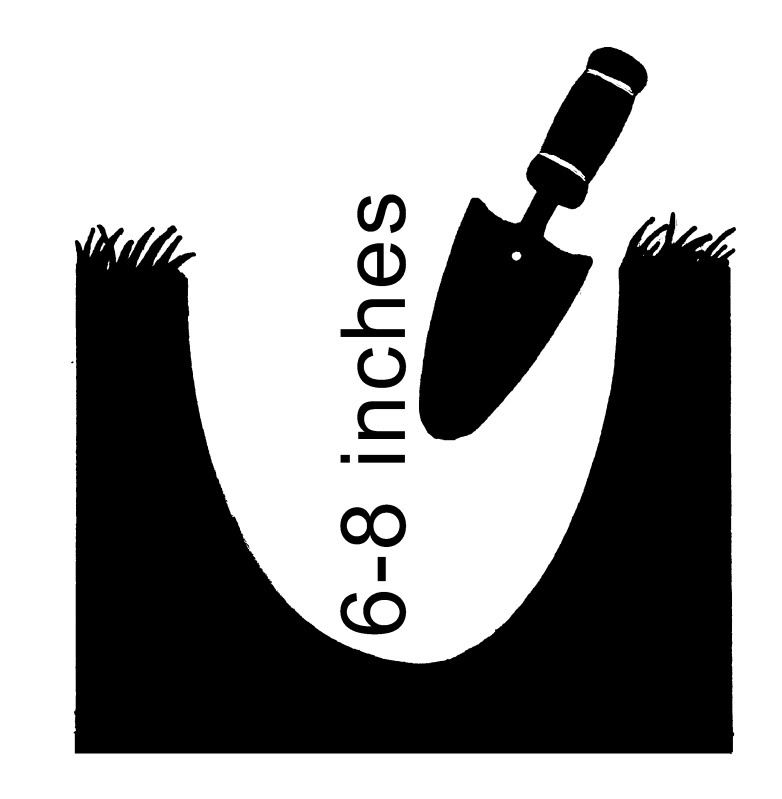
1. In Frontcountry environments, we advocate using existing facilities to dispose of wastewater (sink, sump, etc.) if provided. If no facilities are provided, we’d default to straining and broadcasting. However, if you’re in grizzly country, the sump (6-8” deep cathole) might be preferred as it concentrates smells and provides some smell barrier with the 6-8” of soil and thus might not be as attractive to animals (grizzly bears.
From our Rocky Mountain Skills & Ethics Booklet on wastewater disposal in grizzly country:
2. I would not recommend pouring strained wastewater onto a roadway. The reason is that the food smells in the wastewater are still likely an attractant to wildlife, which can then be drawn to the roadway to investigate. This in and of itself can lead to habituation with food conditioning of animals. Furthermore, it can snowball from there by attracting wildlife to roadways in search of food, which then get hit by cars, which then are fed on by animals like raptors, which then also get hit by cars. It can be a nasty domino effect…
One more question: Seems like you have a lot of information on disposing of human waste, but grey water seems to be up in the air so to speak.
While there is some truth to the assertion that our recommendations on wastewater disposal, predominately in Frontcountry, are “up in the air,” our backcounty recommendations are solid – strain and broadcast or strain and sump in grizzly country, always defaulting to agency regulations. In the Frontcountry, it’s a bit trickier. There are many factors that must be taken into consideration. However, we’d recommend the following: dispose of strained wastewater in provided facilities first (sink, sump, possibly a flush toilet even if allowed), if no facilities exist, strain wastewater and broadcast 200 ft from the campsite if possible (can be a challenge in many Frontcountry areas to actually get that far from the site without being in someone else’s site or near a water source, road, etc.) and be mindful of special considerations in grizzly country.
Wednesday, October 14, 2009
Bigfoot Challenge Update
Geocaching 101…We Need Your Help!
Here is a list of places we are going to be visiting in the next few weeks, first person to leave a comment with coordinates of a cache in the general area of one of these events decides the fate of our little friend!
• Outdoor Adventure Summit – Philmont, NM
• Subaru Ready for Adventure Event – Malibu Creek State Park, CA
• Leave No Trace Center for Outdoor Ethics – Boulder, CO
Tuesday, October 13, 2009
Are You Ready for Adventure?
We spent the weekend at Silver Strand State Beach near San Diego, California for a Subaru-Ready for Adventure outdoor extravaganza. Subaru covered the fees and invited anyone and everyone out for a free day of fun and outdoor adventure at one of the most beautiful beaches in the area. In addition to learning about Leave No Trace, park users were treated to surfing and paddle-boarding lessons courtesy of Billabong, free food, and lots of drawings…think bikes, boards, and kayaks!
Another highlight from the event was the Animal Behavior Specialist from American Society for the Prevention of Cruelty to Animals who was on hand to answer questions about pet behaviors. With the help of pups from the local animal shelter she demonstrated ways to train your dog to be an excellent adventure companion. It was a great event and the best part was that Subaru raised around $2,500 for Silver Strand State Beach over the course of the afternoon!
Join us at Malibu Creek State Park on October 24th for the next Ready for Adventure event!
I’m Not Here To Make Friends
Consider yesterday. I was faced with a choice, while I walked my dog on Mount Sanitas in the Boulder foothills. I watched a woman ignore her dog as it chased a deer for a couple of minutes on a hillside above her within her view. Though well versed in one of Leave No Trace’s frequently-sited texts, “Authority of the Resource" by Dr. George Wallace, an inevitable part of me, while appalled watching this little animal/human drama unfold, wanted to merely mind my own business.
Then, another distasteful instinct scrolled across my subconscious: “I’m not here to make friends.” I wanted to race down into the valley and throttle the woman. This woman was disrupting the flow of wildlife. She was endangering the deer and her dog. Before all of the eyes on the trail yesterday afternoon, she was potentially compromising the rest of our coveted, off-leash dog access.
The bottom line is that neither of these initial instincts would likely have a positive, long-term outcome. The “Authority of the Resource” concept is based upon the notion: “Desirable behavior is more likely to occur if people understand how their actions affect the way nature operates.”
When there is no official authority available, when does the community step in? What would you have done? Beyond enforcement, what is the best way, in the moment, in a natural setting to approach people and talk with them about behaviors or actions?
Call us if your curious about the “Authority of the Resource” concept or to request more information. Goggling “Authority of the Resource George Wallace” will also yield a PDF of his article.
Monday, October 12, 2009
Chincoteague Wildlife Refuge Week
John Muir Trail, September 2009 - Trip Report, part 4 of 4
On the morning of Day 7, we were on the trail by 6:15 am with two big passes on the agenda for the day. From Twin Lakes we had about 5 miles of downhill until we came to the suspension bridge over Woods Creek. Signs are posted to take the bridge one at a time, so you really couldn’t bounce your friends too much, but it was still quite entertaining. I am always amazed at the human effort to build these bridges in a back country setting.
After the crossing we start our first long gradual climb to Glen Pass. This section of trail that traverses through Kings Canyon Wilderness is very popular, and we would see many more people today than we did during the first part of the trip.We stopped along Rae Lakes for lunch and a little more fishing for our friend Steve. With the crystal clear waters and rock outcroppings providing a vantage point, we could see fish swimming all over. A fisherman’s dream!
After lunch, the climb steepened on the way up Glen Pass. Invariably as the terrain steepens, and the trail builders run out of real estate to work with, you start to see more switchbacks. Luckily, you can’t always see them from below, but from above they always made me smile.
We didn’t stop for long at the top, as it was already midday and we had another 16 miles and Forester Pass to go over. Luckily the down hills tend to go fast, as we were now in the direct sun, and it was hot. I was also running low on water, so was eager to get to the next water crossing.After passing the turnoff to Charlotte Lake, one of countless places I would love to come back and explore, we reached Vidette Meadow. A spectacular spot surrounded by granite peaks and ridges in all directions. Some of these massive landmarks would appear so far away, yet with a couple hours of steady hiking we would gradually make our way around or past them.
Once again, we had a beautiful sunset from atop a high pass. At the top of Forester Pass, we donned more clothes and began our descent for the evening. From here to the summit of Mt. Whitney, is a wild and somewhat different landscape. The trail never goes below 10,400 feet, so it is the highest sustained section of trail.
We camped near the junction of the Lake South America Trail and bundled up for what would be our coldest night of the trip. With my 30 degree bag, I slept in wool long underwear top and bottoms and my lightweight down jacket and managed a good night of sleep. I did awake to a frozen hose on my water bladder, and hard frost all over my pack.
This was also our last night on the trail, and with the great weather we had, I never used the lightweight tarp I brought. The tarp and the athletic tape were the only things in my pack that were never used on this trip.
Today was our last day on the trail, and we were well versed in what had to be done. A steady and enjoyable pace, with a lot of time for conversation and taking in the incredible Wilderness all around us. The miles seemed to float by as we began the long approach to the Mt. Whitney climb.We stopped briefly at the trail junction to the Crabtree Ranger Station where we picked up our required Wag Bags. Due to the heavy use in the Mt. Whitney zone, these are required. Thankfully for those heading southbound like us, they are provided on the trail.
Our friend Steve also took a wrong turn at the prior junction. We realized that he would quickly figure it out and self correct, so 3 of us got a little extra break. We joked that he really wanted the extra mile so he could say he hiked more than us. After 20 or so minutes he was back with us. I think this was the only wrong turn during our trek, which is pretty amazing.After a last water fill up at Guitar Lake, we began the climb to the Whitney Trail junction. Looking back from far above, Guitar Lake really does look like a guitar. At the Trail Junction we dropped our packs, and continued on to the summit of Mt. Whitney a little after 1:00 in the afternoon. So much for the common sense approach of being off the summit by noon. We knew with our aggressive schedule we would be climbing passes and topping out on Mt. Whitney late in the day, and accepted that if afternoon thunderstorms were to develop, we would have to modify our agenda. Thankfully this never turned out to be the case.
From the summit of Mt. Whitney, it is approximately 11 downhill miles to the finish at Whitney Portal. This gave ample time to reflect on our journey, the highs and the lows. We also talked about our gear choices, favorites and least favorites. In the end, I think all of us were very happy with the choices we had made. It would be hard to summarize the sense of individual and group accomplishment, but as individuals and friends we had some serious “miles” under our belts.And personally, I can’t wait for the next time I get to play for a week in the High Sierras. When I returned home, my wife asked if I would do it again. My answer was “of course”. When our kids are older, I would love to go back with the same light pack and spend four weeks exploring The John Muir Trail. I would also like to take the kids up and explore segments of the trail at a leisurely kid friendly pace. And as ridiculous as it may seem, a little part of me would enjoy going back and going even faster.
Happy Trails!!