Showing posts with label Partner. Show all posts

Friday, April 16, 2010

B.Y.O.B. - A Restop Affair


(With special thanks to guest blogger - Lara Usinowicz)
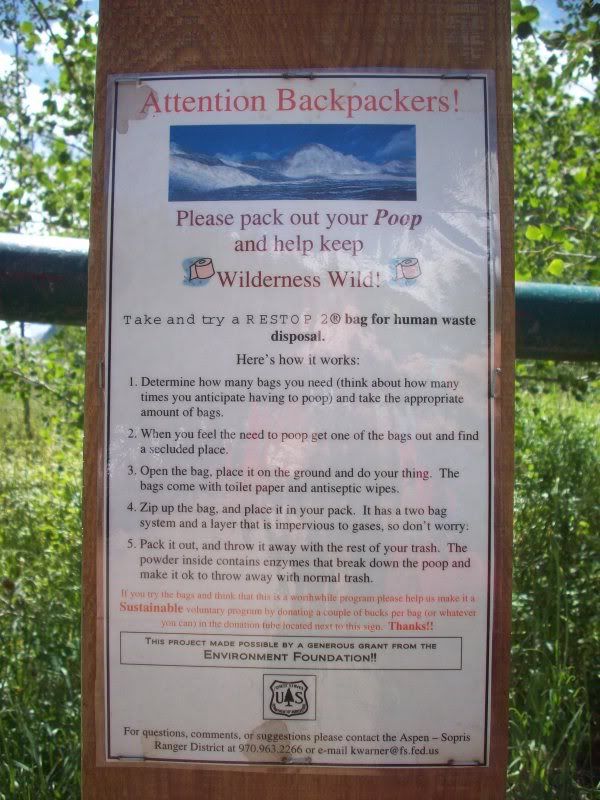
Attend a National Park, Forest Service, or BLM meeting and the topic that seems to garner the most attention is…yep, you guessed it…poop in the woods. These agencies have plenty of other issues to worry about other than how to manage YOUR poop! Some areas have implemented “pack it out” programs where land managers provide a “poop bag” with your backcountry permit but this puts the cost of implementation and management of a backcountry waste management program on the land managers. You wouldn’t expect a Forest Service or National Park Ranger to pack out your trash and human waste should be treated as just that…part of the trash you are responsible for taking with you.

You can easily and effectively take on that responsibility and BYOB (bring your own bag)…a Restop 2 bag, that is!
The Restop 2 solid waste bag provides a safe, sanitary and inexpensive means to transport solid human waste from sensitive wilderness areas. The outer bag is gas-impervious, thereby containing the odor, a significant issue if one is expected to “pack it out.” Inside the bag is a powder, a polymer/enzyme blend, that processes the waste so it is approved for trash disposal. The Restop 2 bag is designed to be used with a Restop Commode in a base camp situation or, in the backcountry, can be used directly on the ground. For a more discreet experience, it can also be used with the Restop Privacy Shelter.
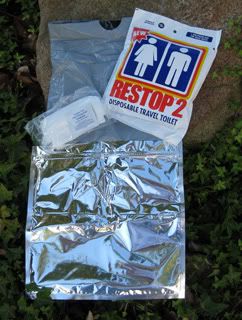
Be a part of a good “movement” and pack out your poop. The Restop 2 bag is being used from Grand Teton to Mount Everest as an effective backcountry waste management solution and should be a part of your packing list when you head into the backcountry.

We can all take responsibility for ourselves in the backcountry or we can let it go to…

For more information, contact Lara Usinowicz. (303) 746-2790 lusinowicz@restop.com

Wednesday, March 3, 2010

Colorado Fourteeners Initiative Peak Steward Training: March 7 in Boulder, CO


The Colorado Fourteeners Initiative is a non-profit organization partnered with the USFS, Leave No Trace, and others whose mission is to preserve and protect the fourteen thousand foot peaks in Colorado through active stewardship and public education. CFI’s Peak Stewards are a group of enthusiastic volunteers who are trained to monitor high-use Fourteeners. Peak Stewards document human and wildlife encounters, user behaviors, compliance with Forest Service regulations, and trail and resource conditions.

Peak Stewards also initiate contact with other climbers when appropriate, and provide educational information about Fourteener-specific Leave No Trace principles for Colorado’s alpine environment. Once trained, Peak Stewards will commit to volunteering a minimum of four days throughout the summer.


Peak Steward Training #2 will be at the Boulder REI from 9:30-3:30, Sunday March 7th. We have the Community Room (big glass room in the center of the store) reserved and plenty of space. Please contact Brian at 303-278-7650 or email to brian@14ers.org for more information or to sign up for the training.

Wednesday, February 24, 2010

SCA Position Announcement


The Student Conservation Association (SCA), is seeking Project Leader's for SCA’s Fire Education Teams & Native Plant Corps. Positions are located in Kentucky, Maryland, Minnesota, North Carolina, Ohio & Utah. For more information about these positions and others please visit them at www.theSCA.org/employment or apply online at http://www.thesca.org/user/register.

Wednesday, October 21, 2009

Partnership Highlight: Wilderness Scotland


Since its beginnings, Wilderness Scotland has demonstrated a strong commitment to sustainable tourism. Their mission is to provide inspiring, memorable and high quality adventure travel experiences which benefit the local environments and communities in which they visit.

Wilderness Scotland is a registered partner of the Leave No Trace Centre, and their Director of Training Myles Farnbank, is a graduate of the Master Educator course (one of only 2 people in Scotland). The philosophy of Leave No Trace is at the core of their guiding principles - belief that education is the best means to protect the natural world from recreational impacts while helping maintain access for recreation and enjoyment. Through subtle education their clients learn about the need to minimize their impact, dispose of waste properly, and respect the wildlife among other things. Wilderness Scotland hopes that these principles will make a lasting impression on their clients, who will hopefully pass on what they have learnt to others.


Wild Orchids

Every effort is made to ensure that each trip is as sustainable as it can be, their trip operations are specifically designed to minimise the environmental impact: group size is limited to a maximum of 8, trips start & finish near train stations, they offset carbon emissions by 110%, and they use local suppliers and source local food where possible. They are all about experiencing the wilderness using human power, be that on foot or by bike, kayak, canoe and sail boat.

Over the years they have won several awards which are a testament to their green credentials, they are the only adventure travel company in Scotland to hold the Green Tourism Gold Award. In 2009, they were awarded 5 Star Responsible Tourism status, which is the highest level by Association of Independent Tour Operators (AITO).

www.wildernessscotland.com 0131 625 6635

-- Polly McClure, Wilderness Scotland

Wednesday, August 5, 2009

Vive l’Experience! Make Plans Now to Join AEE in Montreal!


There are only 2 more weeks to register for the 37th Annual International Conference at the Early-Bird Rate. AEE members receive up to 40% off conference registration and benefits are extensive. Click here to join AEE today.

AEE Conferences help to fuel my passion for teaching because I learn innovative and exciting teaching techniques.
- Tom Potter, Lakehead University

My first conference was in 1977. Since then AEE has been a constant source of energy, information, support, professional opportunity, and an awesome network of friends and colleagues. It is my yearly fix!
- Jude Hirsch, Professor and Chair, Department of Kinesiology, Georgia College & State University and a proud Canadian

"The caliber of professionals in the field to network with and as presenters is the highest I've seen anywhere. Three days at an AEE Conference is like a week of personal coaching from the best in the business."
- Rick Curtis, Outdoored.com, November 2007

Professor Mario Bilodeau lives life large, having climbed some of the world's tallest peaks, including Everest—twice! He also believes in the healing powers of Mother Nature, organizing expeditions for youth with cancer. Learn more about Bilodeau, one of this year’s Conference Keynote Speakers.

Click Here for a List of Workshops and a Schedule Of Events.

*AEE is a proud partner of Leave No Trace. To learn how your organization or company can become a partner click here.*


Sunday, March 15, 2009

TVA Trainer Course

Here are some photos of a Trainer Course we recently completed with one of our new partners, Tennessee Valley Authority. TVA has 290,000 acres of land that offer many recreational opportunities, including water skiing, canoeing, sailing, windsurfing, fishing, swimming, hiking, nature photography, picnicking, birdwatching, and camping. We had lots of fun on this course and were excited to meet and work with all the staff at TVA.

See you out there,

JD and Emily, Leave No Trace Traveling Trainers (Team East)

Wednesday, March 11, 2009

Robert Miller :: Guest Blogger

Kate Bullock and Tracy Howard are Subaru/Leave No Trace Traveling Trainers and you can follow them around the country on their Traveling Trainers blog. On Wednesday February 11th in Fort Collins, Colorado, I had the pleasure of attending one of their two hour Leave No Trace Awareness Workshops as part of my ongoing Volunteer Naturalist training. The primary message of the workshop was that it is vital for every person to understand the combined effect that millions of people can have on our natural resources and, thus, spreading the message of outdoor ethics is an invaluable activity. The following are Leave No Trace suggestions that I become aware of during the awareness workshop:
  • Backcountry camp fires - When backcountry camping, it is advocated to check with a park ranger or local land manager concerning where it is preferred to start a camp fire because existing camp fire circles may have been incorrectly created and building a new camp fire circle can be harmful to the local ecosystem.
  • Leave what you find - Picking up rocks, harvesting flowers, or other items in nature diminishes their significance. In other words, rocks (e.g., Tipi rings), plants, and other natural objects are more powerful in nature than they are in your house.
  • Durable surfaces - A durable surface is any surface that is impervious to footprints (e.g., dry grass, deep snow, rock). For the purpose of leaving as little trace as possible, it is advocated to bike, hike, and camp on durable surfaces. Cryptobiotic soil, found in the deserts of the Colorado Plateau, is the opposite of a durable surface because it is a living soil crust that takes up to 50 years to mature and, if destroyed, causes the land to be vulnerable to dust storms and water erosion.
  • Hiking spread out vs single file - It is appropriate to hike in single file line while on designated trails. However, if your group needs to hike off trail it is prescribed to spread out laterally because a sizable group that hikes in single file line off-trail can create the appearance of a new trail. Unintentionally creating the appearance of a new trail increases the probability that a subsequent group of hikers will think it is a designated trail which can lead to further expansion of unplanned trails. Unplanned trails can have a negative impact on the local ecosystem.
Robert Miller is a volunteer trail naturalist for Larimer County and blog writer for Guide to Colorado Trails. He is co-founder of Two Knobby Tires; an online store for outdoor gear that strives to promote a healthy, active, and eco-friendly lifestyle for hikers, cyclists, skiers, recreational families, and pet owners.

Wednesday, January 7, 2009

Leave No Trace - 3 Myths, Effects, and Recommendations for Outdoor Recreation

For the purpose of protecting our environment and delicate ecosystems, I advocate the following recommendations for outdoor recreation: stay on the trail rain or shine, be mindful of plants near the trail, and pick up your dog's feces. Clay soil and poison ivy provide strong examples of how Leave No Trace principles affirm the importance of protecting our delicate ecosystems.
Leave No Trace

Leave No Trace is an international non-profit organization that promotes the ethical enjoyment of nature. In addition, Leave No Trace is a set of outdoor ethical principles that are rooted in the belief that educating people and enhancing their experiences with the natural world is the best way to preserve natural land and wildlife. The following are the seven Leave No Trace outdoor ethical principles:
  1. Plan ahead and prepare
  2. Travel and camp on durable surfaces
  3. Dispose of waste properly
  4. Leave what you find
  5. Minimize campfire impacts
  6. Respect wildlife
  7. Be considerate of other visitors
The following myths, negative effects of human impact, and recommendations are related to three of the Leave No Trace principles: travel on durable surfaces, leave what you find, and dispose of waste properly.

3 Outdoor Recreation Myths

Hiking, mountain biking, birding, and nordic walking should not come at the expense of future generations. The following are three misconceived myths that hikers, mountain bikers, birders, and nordic walkers may believe:
  1. Messing up a trail is unacceptable - The amount of work that has gone into creating and maintaining a trail can lead people to think that it is better to hike or bike off-trail instead of hiking or biking through a trail's muddy sections.
  2. Poison Ivy should be squashed - Poison Ivy is a nuisance because it can cause rashes, itching, fevers, and blisters when it comes in contact with your skin. Thus, some people think that a trail would be better off if it did not have any poison ivy near it.
  3. Dog feces fertilizes plants near the trail - Feces is known to be a fertilizer so leaving it near the trail may be a good thing for plants. Further, if wildlife feces is okay then leaving my dog's feces near the trail must be okay too. Finally, picking up and disposing of dog feces requires additional energy that can be rationalized as unnecessary.
3 Negative Effects of Human Impact

Improper outdoor recreation can cause harm to soils, plants, and wildlife. What's more, sustained abuse can cause an area to become unusable or undesirable for future generations. Believing in the three aforementioned myths can lead to sustained negative human impact in the form of three compounding and interconnected effects:
  1. Severe erosion can cause riles, gullies, and washouts - Some soils are sensitive to compaction that causes erosion. For example, much of Colorado's soil contains a high level of clay. Clay is a fine-grained soil that can absorb and hold water tightly. However, hikers, mountain bikers, and motorized vehicles that compact clay-rich soils prevent the clay from absorbing water which then causes water to run on top of the soil. Water running on top of a clay-rich soil can pick up and carry loosened clay particles. Since clay takes a long time to form, the end result of compacted clay soils can be erosion that takes years to fix naturally or lots of energy for park managers to fix manually.
  2. Non-native plants replace native plants - Native plants play an important role in localized ecosystems because they prevent erosion and are a valuable food source for insects and wildlife. Specifically, native plants that are lost due to human trampling or human-caused erosion can take years to recover and can lead to a loss of food source for many insects and wildlife. For example, Poison Ivy serves as a food source for bees, caterpillars, and over 60 species of birds. Even though poison ivy is a nuisance to humans, poison ivy plays a vital role in the food webs of ecosystems.
  3. Wildlife search for unnatural sources of food - In most cases, native plants (e.g., poison ivy) provide a more valuable food source than do non-native plants. Wildlife may begin to search for unnatural sources of food such as human garbage, pets, and gardens if their natural food sources are lost.
3 Outdoor Recreation Recommendations for Minimizing Human Impact

The following are three outdoor recreation recommendations that can help you minimize your impact on the environment so that the land and wildlife habitat will be preserved for future generations:
  1. Rain or shine, stay on the trail - Trails are designed to withstand repeated human use and can be repaired easier than off-trail areas. Particularly, soil and vegetation around a trail are likely to be sensitive to repeated human use. Thus, it is better to dirty your shoes and muddy up a trail than to mess up the surrounding soil that contains vegetation. Further, it is preferred that you choose to hike or bike on a drier trail or paved trail instead of hiking or biking on a wet trail. Finally, you can kindly remind others to stay on the trail too.
  2. Be mindful of plants near the trail - Do your best to not trample plants near the trail. In addition, do not pick flowers or remove plants. Finally, kindly remind others to do the same.
  3. Pick up your dog's feces - Dog feces contains high levels of nitrogen not found in wildlife feces because dog food is chemically-engineered. In Colorado, most of the soils contain a low concentration of nitrogen and, thus, most of the native plants thrive in a low nitrogen soil. Non-native plants and weeds that thrive in high nitrogen soils can replace native plants if enough nitrogen-heavy dog feces is absorbed into the soil. The end result is a loss of food source for local wildlife and insects. Thus, it is very important to use pet waste bags to pick up and dispose of your dog's feces.
Robert Miller is an ardent hiker who lives in Fort Collins, CO. He has a 22 month old daughter with which he and wife have hiked over 85 miles. He is co-founder of Two Knobby Tires, an online store (and Leave No Trace Partner) for outdoor gear that strives to promote a healthy, active, and eco-friendly lifestyle for hikers, bikers, skiers, recreational families, and pet owners. In addition, he is a volunteer trail naturalist for Larimer County and a blog writer for Guide to Colorado Hiking, Biking, and Camping.

Wednesday, September 10, 2008

Leave No Trace Partner Resource Page


In our continued effort to “green” our operations at the Center, we are eliminating the use of our Partner Resource CDs with Leave No Trace logos, PowerPoints, PSAs, and educational materials for dues-paying partners. We are proud to introduce the Leave No Trace Partner Resource Page exclusively for partners.

If you are a current partner in good standing, please email Catherine for log-in information. You will then be directed to the Partner Resources page, where you can now access a wide range of documents, presentation materials and Leave No Trace logos all in one place.

Wednesday, July 30, 2008

Spadout.com!

Want to help out Leave No Trace? Here's how you can donate at no cost to you and win a free shirt! 


Spadout.com, a new Corporate Partner of Leave No Trace, is a website that monitors prices and reviews outdoor gear.  Spadout.com will donate $0.50 - 4.00 per person that writes reviews or refers friends to Spadout. All you do is donate a few minutes of your time educating our community about outdoors products, and we will donate to Leave No Trace. The first 5 people who contribute $2.50 or more and post their Spadout username on the Leave No Trace Facebook Wall will win a free Spadout.com T-Shirt.

Start contributing / full details:
http://www.spadout.com/charity.php?charity_dedpoints&charity_moreinfo

Wednesday, July 2, 2008

Guest Blog: Off to a Sunny Start!


What do get when you have 8 sea kayakers, 4 Master Educators, and 2 days of beautiful weather? The Washington Water Trails Association 5th annual sea kayaking Trainer Course! Held June 14-15, the course was a wealth of Leave No Trace information, role-playing (how exactly should you “Be Considerate to Others” when they took the available campsites?), and laughter. We paddled from Vashon Island, just off the coast of Seattle, WA, over to Blake Island and then around Blake to return to Vashon. We shared Blake Island with 20 Boy Scouts, 30 motor boaters, and numerous hungry raccoons; a perfect opportunity to practice Authority of the Resource Technique, Dispose of Waste Properly, and Respect Wildlife.


The Trainer Course was also the beginning of the summer work for Washington Water Trails Sound Education and Action (SEA) Kayaker Team. The SEA Team spends Friday-Monday paddling throughout Puget Sound educating folks about Washington Water Trails and how they can practice Leave No Trace while they are exploring the Sound. Washington Water Trails Association is a non-profit partner with the Center and in a unique melding of organizations this year’s SEA Team consists of North Moench and Ella Goodbrod, Traveling Trainers from 2006-2007!

If you are going to be paddling in Washington this summer be sure to check us out and look for future guest blogs about our exploration and adventure in Puget Sound.

--Ella Goodbrod & North Moench, Washington Water Trails Sound Education and Action (SEA) Kayaker Team and former Subaru/Leave No Trace Traveling Trainers.

Thursday, June 19, 2008

Partnership Highlight: Venture Media Group

By Sara Close

Most companies these days run their daily operations with the natural ebb and flow of capitalism and consumerism. However, as topics of resource conservation, social responsibility, and carbon footprints enter in to the daily vocabulary of American citizens, they also find a way in to the cultures of many companies. More and more, Leave No Trace is honored to have a strong presence of these supportive companies within our community, who are dedicated to the future preservation of natural lands for their clients, and the greater community.

Venture Media Group [http://www.venturevisuals.com] is one of those companies. Executive Producer, Thomas Kranzle, shares his company philosophy with Leave No Trace:

“When founding Venture Media Group, I set out to create a business that was a direct extension of my values as they apply to running a production company. Among these are creativity, accountability, honesty, embracing change, and most importantly responsibility.

Initially there were two primary goals for Venture Media Group: to produce the highest quality visual content and to have a company that is responsible in all of its business practices. With our Planet in the state it is currently, environmental conscientious ranked quite high on that list of responsibilities.

Truthfully, I was a bit hesitant to jump on the ‘green’ bandwagon. It seems like that word is thrown around far too carelessly nowadays. I sometimes have a hard time discerning if ‘green’ efforts are really that, or if they are just marketing ploys to raise a company’s corporate image.”

So what is Venture Media doing, especially in a business that has obvious environmental impacts? First, recycling programs are in place for everything from their office supplies, props, cameras and computers. Their video and photo departments are built on a digital platform to eliminate film processing. They are also committed to print only on recycled or alternative papers with soy-based inks.

“This is a decent start,” says Kranzle, “but we feel that any efforts made at home need to be matched by support to organizations that are on the front line fighting to restore our Planet. We therefore joined 1% For The Planet when launching Venture Media Group.”

Through 1% For The Planet, Kranzle established their first non-profit partnership with Leave No Trace. Even better, to encourage similar actions from other industry participants, they initiated an eco-discount program, which offers discounts of up to ten percent to companies that support like environmental efforts or product sustainable products.

“We do this because we love the outdoors and want to see natural environments preserved for future generations. Alone we make up a small portion of the equation but together we can make a big difference.”

Leave No Trace is honored to celebrate its first year of partnership with Venture Media Group, and thanks Thomas Kranzle for his generous contribution as a guest blogger.

By Sara Close
