Showing posts with label leave what you find. Show all posts

Monday, April 30, 2012

Open Places are Great Spaces

Little Missouri River in Theodore Roosevelt National Park
The e-tour has made it to the Dakotas! Over the past 48 hours, we have traveled from Nebraska to South Dakota to the northern reaches of North Dakota, arriving in Minot today for a couple days of training. It's been a perfect way to experience National Parks Week, as we have been lucky enough to stop in two different National Parks in the Dakotas -- Wind Cave and Theodore Roosevelt National Parks. These treasures of the prairies, Black Hills, and badlands highlight both unique geology and incredible wildlife. One of the coolest aspects of the parks are the herds of wild bison or American Buffalo. Drawing on the legacy of President Teddy Roosevelt to protect the bison by reintroducing them to the prairies above Wind Cave in 1913 from the New York Zoological Society, these parks provide sanctuary to some of the most magnificent creatures on Earth.

Buffalo in Theodore Roosevelt National Park
We want to challenge you to think about the importance of wide open spaces like these. Often people look to preserve landscapes, but sometimes protecting wildlife can be even more crucial. When you think about the Leave No Trace Principle "Respect Wildlife," try and imagine it as an overall goal. More than just not feeding wildlife and avoiding encroachment upon their space, this principle also encompasses preserving their habitat for them when you go into the outdoors. Think about dead trees that are still standing, or snags, which can be used as homes for animals when collecting firewood. Think about campsite selection near water sources that can affect wildlife drinking behavior for days. Think about the role old animal bones or antlers play in wildlife nutrition as sources of calcium or vitamins and why that's an important reason to Leave What You Find. In the Dakotas, the majesty of the bison drive home the importance of Respecting Wildlife, but every time you go outside to explore you are visiting animals' habitats. So think about that next time you're on a hike, bike, drive, or paddle!

On a Buffalo,

Quinn & Frank

Thursday, March 29, 2012

Be Our Guest

Students sketching Lower Yosemite Falls
A Leave No Trace mindset tip from the e-tour:

Heading to a National Park, State Park, or National Forest? Don't just think of yourself as a visitor -- think of yourself as a host! Everyone who visits these incredible areas after you will enjoy your hospitality. 
Signage explaining the importance of ancestral artifacts


Think about the reasons why you like going to these places. Is it a memorable vista? A waterfall tucked into a canyon? Artifacts scattered near a trail? When you protect these items, and choose to Leave What You Find, you're setting out the red carpet for those who come after you. You're actively being the host, inviting friends, family, and friends you just haven't had the chance to make yet to experience your favorite spots. So behave appropriately, because that's what good hosts do!

Aptly placed sign at Yosemite National Park
Patrolling the Premises,

Quinn & Frank

Thursday, March 8, 2012

All My Good Friends Call Me Wilderness

The Galiuro Wilderness
This past week the e-tour tromped, trekked, and tracked through the Galiuro Wilderness on our Leave No Trace Master Educator Course with NOLS (the National Outdoor Leadership School). This ecosystem, a "sky island" in Southern Arizona, moves from desert to alpine vegetation as it increase in elevation up to and above 7,000 feet. The Wilderness Area was designated in 1964, right after the passage of the Wilderness Act -- and it truly is wild. The trails are intense and off-trail travel is even wilder. The Master Educator Course is a truly incredible experience to learn both about the finer points of Leave No Trace as well as how to message them to others. After going through one, Master Educators form a cadre of Leave No Trace experts who can run Trainer Courses as well as practice and share techniques whenever in the outdoors.

While there, we spent a lot of time really breaking down the finer points of Leave No Trace. The awesome group we were with provided exceptional teaching including a highlight student-led presentation on Leave What You Find, where all the participants played a version of the game "Clue" where only half of us had enough clues to actually solve the mystery. It drove home the importance of preserving heritage sites so that archeologists can study and unlock the secrets of our past. We think everyone learned a ton on this course, led by some superknowledgable instructors! We're stoked to see the outreach and training from all the Leave No Trace all-stars in our crew.

Dancing through the manzanita,

Quinn & Frank

Saturday, February 18, 2012

Wows and Pows - Week of Feb. 13th

Wows!

It was our first week on the road and we got to see tons of epic places, awesome landscapes, and work with some cool Leave No Trace learners! One highlight was working with the S.A.F.E. Afterschool Program in Rio Rancho, NM. In what must have been one of the most epic days in elementary school history, the students went on a field trip to a Natural History Museum to learn about dinosaurs and fossils before playing some sweet Leave No Trace games! One big hit was Okay/No Way! This rockin' game mixes questions about all seven principles, PEAK-style, with freeze tag. Kids as young as kindergarten were answering about observing wildlife from a distance with the Rule of Thumb technique and staying on the trail when on a hike. Thanks again, Rio Rancho!
Quinn poses in Petrified Forest, but stays on the trail!

Pows!

In between Albuquerque and Sedona, we were lucky enough to stop in and spend an afternoon at Petrified Forest National Park. This epic park is home to petrified wood over 250 million years old! Everyone we met who worked there was super-friendly, informative, and really dialed in to the Leave No Trace principles and mindset. Unfortunately, a lot of the sites at this park are heavily impacted. The park has to go to extraordinary measures to prevent individuals from removing pieces of the petrified wood from the park, including vehicle inspections when exiting. We also had a long talk with a Leave No Trace all-star ranger who was endeavoring to keep people on the path at petroglyph sites in order to preserve the history of peoples who once lived in the area hundreds of years ago. Remember when you're outdoors to Leave What You Find and Choose the Right Path, staying on the paved trail and avoiding visitor-created paths. We want to give a shoutout to all the rangers putting in such great work to preserve one of the coolest places we've ever been to! Y'all rock!

From the Sunny Southwest,

Quinn & Frank

Wednesday, March 2, 2011

Discovering the Leave No Trace Principles Through Art

A busy Team West wrapped up February with an awareness workshop in Cudahy, CA at the Ellen Ochoa Learning Center working with an excited group of 70 sixth grade students. Following a comprehensive introduction to the Leave No Trace PEAK (Promoting Environmental Awareness in Kids) Program, the students were instructed to select one of the 7 principles that resonated with them. Once each student selected a principle, we asked them to get those creative juices flowing and illustrate the principle that they selected. In the picture above, one inspired student chose to represent "Leave What You Find" by demonstrating one way to remember the natural world without taking it home to be displayed in your living room. Can you think of other ways to remember items, thereby Leaving What You Find?
Remember natural items derive their power from the environment from which they came!

Explore Responsibly...Kate and Tracy

Monday, September 27, 2010

Invasive Species - A growing problem in the pacific northwest


Washington state: Inspectors stop boat with invasive mussels

State officials say they stopped a boat that was contaminated with zebra mussels before the invasive species could spread in Washington waters.

The Associated Press
BELLINGHAM, Wash. —

State officials say they stopped a boat that was contaminated with zebra mussels before the invasive species could spread in Washington waters.

Officers with the Department of Fish and Wildlife and Washington State Patrol in Cle Elum inspected the 57-foot boat being hauled from Michigan to British Columbia. They found the tiny zebra mussels attached to a light fixture on the boat's stern and sent it to be cleaned in Bellingham.

Officials say the mussels have caused damage in other states. They multiply quickly, threatening native fish and clogging pipes used for irrigation and municipal water supplies.

The Bellingham Herald reports that state agencies have been inspecting boats hauled into the state since 2006 and found quagga and zebra mussels on more than 20 boats.

Inspecting, washing and sanitizing equipment between trips is one effective way to help iminimize the spread of invasive species. For more information on invasive species, visit: http://www.invasivespeciesinfo.gov/

Monday, July 12, 2010

My Backyard: Wildflower Photography Tips

As the wildflowers bloom in Colorado’s Rocky Mountains, I find myself using my camera more and more for scenery and landscape shots. Wildflowers are one of my favorite subjects, and taking pictures of them is a great way to support the Leave No Trace principle, Leave What You Find. Considering some of the following tips will help you make the most of your next outdoor excursion.
  • Consider using a tripod to steady the shot and produce a sharp image.
  • Get up early and shoot the sunrise in the best location. Scout the area the day before or during the dead time during the high noon sun.
  • Wait until sunset to shoot large fields of flowers, the light is golden and will render your subject much better than the harsh light of the day.
  • Take plenty of batteries for your camera — or make sure your batteries are charged.
  • Take more than enough film — or a sufficient memory card - you may just use it all.
  • Fill your frame! It’s okay to not have the entire flower in photo. Just like shooting a portrait of a person, all we need is a head and shoulder, not a full length body shot. Consider portraits and landscapes for your shots.
  • Shoot from a low level, just as you shoot at portrait on the same level as the subject (you don’t shoot down on the top of the head) flowers should be shot with the camera at the same level as the flower.

Wednesday, November 18, 2009

Rocky Road


We facilitated a Leave No Trace Trainer Course in Acadia National Park earlier this year. It was a great course with lots of discussions about outdoor ethics! One conversation that came up during the principle of "Leave What You Find" was the practice of rock stacking. It was the first time that this issue had ever been brought up during one of our courses and opinions ranged from finding rock stacks beautiful to offensive. At the time, we had not given much thought to the carefully balanced rocks we had occasionally seen along trails.

So, why months later are we still contemplating the question of rock stacking? Well, we recently had the opportunity to hike in Bryce Canyon National Park and came across a portion of trail that was covered with thousands of rocks balancing upon each other. The sight immediately brought to mind the "Leave What You Find" conversation we had back in Acadia National Park and we could see why there had been such varied feelings towards the activity. While one artfully balanced rock stack can be quite beautiful, seeing these stacks in such a large quantity in a national park felt somewhat disconcerting.

What are your thoughts on rock stacking?

Wednesday, July 15, 2009

Indian Peaks Wilderness Macro Photo Project


King Lake, our destination, sits just below the Continental Divide at 11,648'. 


On the Fourth of July I ventured into the Indian Peaks Wilderness area with 2 friends and 3 dogs.  The Indian Peaks Wilderness is a wilderness area, just west of Boulder, is managed by the United States Forest Service within the Arapaho and Roosevelt National Forests. The wilderness area borders Rocky Mountain National Park to the north, and the James Peak Wilderness to the south, and straddles the Continental Divide.  Summary:  it's gorgeous.


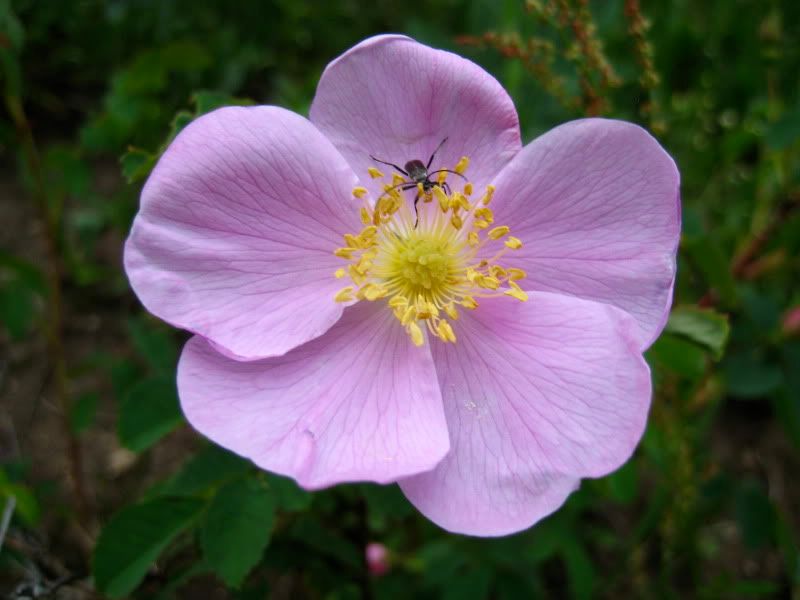
The Front Range received its second rainiest June in more than a Century, which means great things for our watersheds and wildflower viewing.  Over the course of our 13 mile hike, I quickly realized that my pictures of meadows filled with blooming wildflowers weren't doing the beauty justice, and thus my macro photo (close-up photos) project was born.  Since picking the flowers was out of the question (in keeping with the Leave No Trace principle Leave What You Find) I decided to take a series of close-up photos of wildflowers, leaves, tree bark ... whatever piqued my interest - including my friend's dog, Harvey.  It was a great way to explore the intricate beauty of my surroundings.  

Oh, Harvey ...

Wednesday, July 1, 2009

Leave What You Find

"I will be the gladdest thing under the sun. I will touch a houndred flowers and not pick one" Edna St. Vincent Millay

Recreating in the outdoors with kids is a wonderful experience, but it might take a little extra effort to convince them that they must leave what they find for the next person to enjoy. This is tough for many kids to understand, especially when the woods are so full of treasures to collect! Here are a few ways that your kids can still "collect" all the wonderful things that they see:

1) Make a sketch of interesting plants and animals. On your next adventure, bring along a notepad and some crayons and encourage kids to draw the pretty rocks, interesting pine cones and beautiful flowers that they see along the way. When you get home, you can help kids write about the drawings and turn their notebook into a story about their day.

2) Take pictures. Kids will love looking back at all of the wonderful tresures they found on your adventures. If your kids like to collect things, help them organize the pictures into scrapbooks or special folders on the computer so that they can look at their treasures again and again.

3) Bring your binoculars. When kids spot an animal, they might be tempted to run up to get a better look. To avoid frightened wildlife (and disappointed kids) have a pair of binoculars handy to view wildlife from a safe distance.

Thursday, June 11, 2009

Take time to stop and smell the wildflowers...

Hello all-

Thanks to everyone that participated in our most recent poll! To refresh your memory, the question was:

"You're hiking on a trail through a wet meadow filled with beautiful wildflowers. Your best option is to..."

The answer, with 93% of the votes was C: "Stop and smell the flowers, smile and take home a picture instead." While this may not have been the most difficult of the poll questions thus far, it certainly can spark the most discussion.

Outdoor trips with family and friends can create a lifetime of memories and, understandably, people want to take a memento with them. The issue is never one person picking a wildflower, it's the thousands (maybe millions) of people in front or behind them that all take one flower. Leave No Trace science and research examines the cumulative effects of visitors on public lands, of which trail impacts is one.

So, no matter how you say it...

Leave What You Find
Take only Pictures, Leave Only Footprints
Leave It Better than You Found it


...enjoying objects in their natural element will leave the most lasting impression and also the least impact.

Now, for a special trivia question that also coincides with Leave What You Find. Feel free to leave your guesses as comments and I'll respond in the next few days

"In nature, it takes about 5 hours 45 minutes to make an average _____..."

Friday, June 5, 2009

Photo of the Week: 6/6/09

Sarah Creek Falls in Central Oregon.  

Wednesday, March 4, 2009

What to do with the deer antler....


Our most recent poll regarding what to do with deer antlers generated some good answers and a few questions. As you'll recall, the poll question was:

"THE PRIMARY ARGUMENT FOR LEAVING A DEER ANTLER INSTEAD OF KEEPING IT AS A SOUVENIR IS...?"

Answer choices were:
  1. So scientists can learn about deer behavior.
  2. To avoid disturbing fragile ecosystems.
  3. To allow others to enjoy the object.
  4. So that its nutrients can return to the soil.
While technically any of the above answers could be correct, the most correct answer is to leave so others can enjoy the object. However, there are also other aspects of this situation to consider. 

People visit wildlands for many reasons, among them to explore nature’s mysteries and surprises. While many visitors are offended by finding litter in these wild areas, ecologists, botanists, archaeologists and other scientists are actually more concerned about impacts that impair the function of natural ecosystems, affect rare species or destroy the historical record. They are worried about what is missing from our favorite wildlands, things like native plants, healthy soils and archaeological artifacts, as well as rocks, wildflowers, antlers, feathers, fossils and other objects of interest. Leaving such things as we find them helps scientists understand the natural balance of the area and allows us to pass the gift of discovery on to those who follow.

Leave What You Find means retaining the special qualities of every wildland area—for the long term.
