Showing posts with label minimizing impact. Show all posts

Thursday, May 13, 2010

First Leave No Trace Hot Spot: Red River Gorge


CONTACT
: Sarah Folzenlogen, Leave No Trace Center for Outdoor Ethics

303/442-8222

Sarah@LNT.org

Leave No Trace Center for Outdoor Ethics Selects Inaugural Hot Spot to Raise Awareness for Areas with Critical Recreational Impact

Designates Red River Gorge in Kentucky as First “Hot Spot”

Boulder, Colorado (May 12, 2010) – The Leave No Trace Center for Outdoor Ethics (The Center) today announced the selection of its first “Hot Spot”, as part of an initiative to raise awareness for areas impacted by recreational use. Seeking to make a difference nationwide, The Center created the Hot Spot Program as a public call to action in which individuals, land managers, and communities can rally for support from Leave No Trace to protect their local recreational resources. The Center will assess nominated areas and select two sites in 2010 as the recipient of programs to reduce impact and increase awareness of how to enjoy the outdoors responsibly.

To kick-off the initiative, The Center designated the Red River Gorge, a National Natural Landmark managed by the USDA Forest Service, as its first “Hot Spot”. The Leave No Trace Center for Outdoor Ethics will assist land managers at the Red River Gorge, and future designated Hot Spots, to reduce recreation-related impact through outreach and education, and collaborating locally with motivated individuals, groups, non-profit organizations, and governmental agencies.

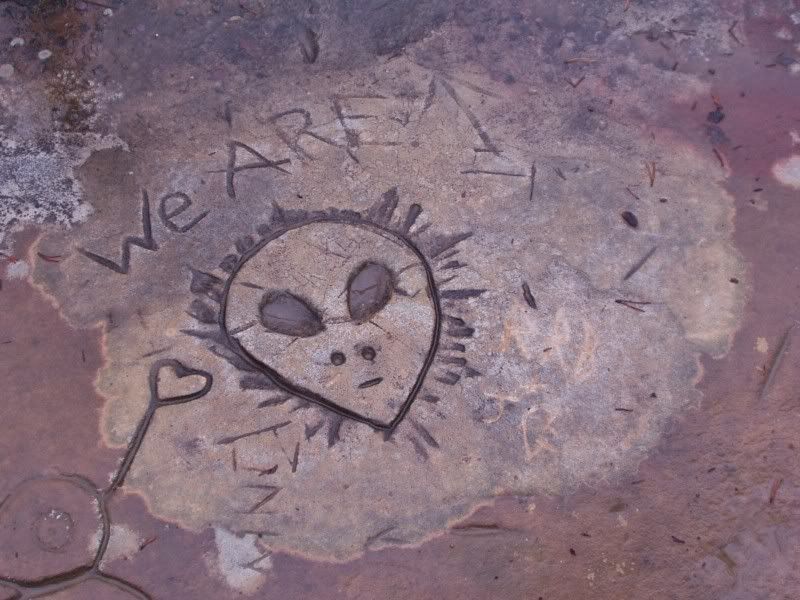
Located in eastern Kentucky near several urban areas, the Red River Gorge is home to high sandstone cliffs, waterfalls, natural stone bridges and arches, enjoyed by countless hikers, rock climbers, and recreational users. Much of the Gorge is located within the Daniel Boone National Forest and is managed to protect its watersheds, wildlife, archaeological resources, and spectacular geologic features. The Center chose the Red River Gorge as a Hot Spot due to several recreation-related impacts including litter, trail erosion, damage to vegetation, and vandalism of property, natural features, and cultural/heritage sites within the Gorge.

The Red River Gorge was recently the focus of an intense planning effort known as the Limits of Acceptable Change process (LAC). The LAC process brought together a diverse group of concerned citizens that worked together with the Daniel Boone National Forest to chart a course toward improving the condition of the Red River Gorge. The need for increasing the effectiveness of Leave No Trace education was an important focal point of this group.

In many recreational areas impact is often a result of unintentional harm to the environment, or due to a lack of knowledge and skills of how to conserve wild places. The Center currently implements programs and initiatives to educate recreationists on how to prevent unintended impacts and protect natural resources. The Hot Spot program will select areas in need depending on a variety of recreational impact criteria.

As the scope of work at Red River Gorge begins to take shape, The Center will publicize volunteer opportunities, upcoming events and trainings as well as ways the public can get involved.

For questions about the program or for more specific information, please contact hotspots@LNT.org, call 1.800.332.4100 or visit http://lnt.org/01_community/hotspots.php

About the Leave No Trace Center for Outdoor Ethics
The award-winning Leave No Trace Center for Outdoor Ethics is the international leader in sustainable recreation practices. The nonprofit organization teaches children and adults vital skills to minimize their impacts when they are outdoors. Leave No Trace is the most widely accepted outdoor ethics program used today on public lands across the nation by all types of outdoor recreationists. For more information about Leave No Trace, visit: www.LNT.org.

Thursday, October 15, 2009

How do you minimize impacts?

Following our last event at Radford University in Radford, VA, we were excited to discover that nearby Blacksburg, VA was celebrating Sustainability Week! As part of the celebration, a local theater was showing the documentary No Impact Man. This film is based on a man who decides to eliminate his environmental impact for an entire year. His wife and 2 year old daughter join him on his mission to be impact free. The film was very inspiring and doesn't demand that we all strive to eliminate our carbon footprint, but evaluate what we can do in our own community to do our part to take care of the resources on this planet.
How does this all relate to Leave No Trace? Although it is impossible to leave NO trace, through education and the understanding of our individual impacts, we can all do our part to preserve and protect the quality of the finite resources that are our outdoor playgrounds! So whether you are enjoying your backyard or your backcountry, consider ways you can minimize impacts on the environment!
Safe travels...Kate and Tracy

Thursday, May 15, 2008

Is the Leave No Trace Trainer Course Really Effective?


The Leave No Trace Center for Outdoor Ethics has developed a variety of printed educational materials and training programs to communicate Leave No Trace practices and ethics for over a decade. There has been little research, however, to evaluate how well these messages are absorbed and used by outdoor visitors. Dr. Jeff Marion and Melissa Daniels completed and published a study to evaluate the effectiveness of the 2-day Leave No Trace Trainer course in order to document and evaluate participants' gain and retention of knowledge, ethics, and reported behavior.

The questionnaires were developed based on the most current Leave No Trace information available in the Leave No Trace Skills & Ethics booklet series and Trainer course materials. Over a five month period, the researchers advertised their study through the database of Master Educators, contacted those who were offering Trainer courses, and asked if they were interested in participating in the study. In all, there were 20 courses that distributed pre-course and post-course questionnaires to the participants; an additional follow-up survey was conducted with these participants 4-5 months later. The researchers received a total of 166 pre-course, 156 post-course, and 112 follow-up surveys.

The Results:

The knowledge section contained 25 items, each counted as correct or incorrect and scored on a 100-point scale. The mean score for all knowledge test items improved significantly from a mean pre-course score of 70 to a post-course score of 82. There was a slight 3-point drop from post-course to follow-up, but the long-term change, pre to follow-up, remained statistically significant. Of the 25 knowledge questions, 17 showed significant improvement pre to post, with the greatest improvements in items related to repacking food, traveling off-trail, and scattering ashes. There were no significant declines pre to post.

The ethics section contained 16 items for which participants rated their agreement on a seven-point scale. These showed a similar pattern to knowledge for overall mean scores. Ethics scores for the pre-course survey were fairly high—5.8 on a scale of one to seven—and improved significantly on the post-course survey. The follow-up showed a significant decline from the post-course survey, but there was still a significant improvement pre- to follow-up.

Reported behavior was assessed at two points in time—pre-course and follow-up. These ten items had three possible responses and space for comments. Responses were scored as one, two, or three based on use of the most acceptable Leave No Trace practice. All mean scores for the items were above the middle response of 2, indicating that most respondents chose the most appropriate or second-most appropriate behavior, even prior to the course.

Summary:

The evaluation of the Trainer course curriculum indicates that it is successful in promoting Leave No Trace practices to participants. Research results revealed statistically significant improvement in Leave No Trace knowledge, ethics and outdoor practices both immediately following the course and 4-5 months later. Findings support the contention that improved Leave No Trace knowledge and ethics lead to the adoption of low impact practices.

For more information or to download the study and the questionnaire, please visit http://lnt.org/training/lntrelatedresearch.php

Wednesday, April 2, 2008

(Lack of) Power Hour


Last weekend marked the first ever global "Earth Hour" an event that started last year in Sydney, Australia as a way to demonstrate how much energy can be saved by turning the lights out for one hour. Over 300 cities participated in the event worldwide.

"Earth Hour" was approximately 8 p.m. RMST and many businesses in the Denver/Boulder area showed their support; participating restaurants, for example, served candlelight dinners. A friend of mine told me that a government building in downtown Denver that turned off its lights for one hour saved energy equivalent to the amount that six homes use in a year. 

If anything, the event served to promote the idea that there are many simple ways we can minimize our impact on our planet, whether it be in our homes or out in the field. In other words, proactive programs such as these, and Leave No Trace for that matter, are threads of a much larger tapestry of sustainability.

For more information about this specific program, visit: http://www.earthhour.org/
