Earlier this year the Leave No Trace Center for Outdoor Ethics selected its first Hot Spot of the year, the Fourmile Area near Buena Vista, Colorado. Near both Denver and Colorado Springs, Fourmile is one of the most heavily used areas in central Colorado and recreation-related impacts are significant and growing. Impacts at campsites such as campfire scars, tree-cutting, and expansion of denuded sites as well as excessive trash and human waste have become major issues at Fourmile. Also, areas scarred and eroded by off-trail travel are still in the process of recovery. In response to the request of local land managers and volunteers, the Fourmile Area has been designated as a 2012 Leave No Trace Hot Spot.
Located in northern Chaffee County, the 100,000-acre Fourmile Area offers ample outdoor recreation such as camping, mountain biking, horseback riding, hiking, ATV and motorcycle trails, and wildlife viewing. In partnership with the local volunteer-based Friends of Fourmile, the USDA Forest Service, the Bureau of Land Management and several other key stakeholders, the Leave Trace Center for Outdoor Ethics will mitigate the growing impacts there by implementing an effective Leave No Trace program.
Components of the Hot Spot include Leave No Trace training for key agency staff and volunteers, developing Fourmile-specific Leave No Trace information, hosting a Leave No Trace community-based event to raise awareness, a service/learning project to mitigate existing recreation-related damage, and providing consultation on best management practices for minimizing future impacts in the Fourmile Area.
In late April Leave No Trace Center staff will travel to Buena Vista to offer back to back workshops for local youth and for volunteers and federal agency land managers. The goal for these outreach and training sessions is to equip the community with Leave No Trace skills and ethics, as well as techniques for effectively sharing Leave No Trace with outdoor enthusiasts who spend time in Fourmile.
For more information on the Hot Spot Program or to nominate an area, visit: http://lnt.org/01_community/hotspots.php
Showing posts with label Leave No Trace Hot Spots. Show all posts
Showing posts with label Leave No Trace Hot Spots. Show all posts
Wednesday, March 21, 2012


Friday, December 2, 2011
Mount Rainier Hot Spot Success

The Leave No Trace Center for Outdoor Ethics recently completed work at Mount Rainier National Park’s Paradise Area, a 2011 Leave No Trace-designated “Hot Spot.” Located in Washington, Mount Rainier National Park receives up to two-million visitors a year. At Paradise, the most heavily visited area of the park containing 26 miles of trails, recreation-related impacts have been severe. Miles of additional social trails and damage to subalpine meadows caused by off-trail travel have resulted.
In partnership with the National Park Service, the Center implemented a multifaceted education program to mitigate these impacts. The Center provided Leave No Trace training for key park service staff and over 50 volunteers, developed Paradise-specific Leave No Trace information, created Leave No Trace signage for visitors, and provided consultation on best management practices for minimizing recreation-related impacts. The Center also hosted three Seattle-based events to involve the local community and raise awareness about the initiative.
“The adoption of Leave No Trace at the park will play an active role in preserving it for generations to come. We are very proud of this important work with the National Park Service,” says Dana Watts, Executive Director for the Leave No Trace Center for Outdoor Ethics.
In its second year, the Leave No Trace Hot Spots initiative raises awareness about natural areas around the country facing the threat of irreversible environmental damage. As part of the initiative, the Leave No Trace Center for Outdoor Ethics works with volunteers, nonprofit organizations, friends groups and governmental agencies to reduce the impact of recreational activities in the selected endangered area. This goal is achieved through community outreach, education, training, signage, educational materials and local collaboration.
For more information on the 2011 Hot Spots initiative, as well as ways to get involved, visit http://www.lnt.org/01_community/hotspots.php.
Tuesday, June 28, 2011
Bigfoot Sightings in Seattle
 Greetings from Seattle!
Both the Outreach and Education Departments are up in the Evergreen State this week taking part in Seattle Backyard Sessions. The Sessions are aimed at increasing networking and volunteer opportunities amongst Leave No Trace community members, as well as highlighting our important work with Mt. Rainier National Park as part of the Hot Spot program.
Here's a glimpse of the event last night - as expected, Bigfoot made an appearance.
For more information, be sure to read the upcoming eNews which will highlight our partner organizations, as well as our work with Mt. Rainier.
If you are in the Seattle area today, come check out the second session at the REI store in downtown Seattle. The event starts at 6:00 PM. See you then!
Sarah
Thursday, May 5, 2011
First Seattle Backyard Session a Success

April 18, 2011, Seattle, WA: The Leave No Trace Center for Outdoor Ethics conducted a Backyard Session in Seattle, Washington to discuss this year’s Hot Spot at Mount Rainier National Park’s Paradise Area. Mount Rainier National Park rangers, Jordan Mammel and Christine Czazasty, presented an overview of impacts related to recreation at the popular Paradise area within Mount Rainier National Park. Mount Rainier stands as an icon of the Pacific Northwest and it was evident that there is incredible enthusiasm around Mount Rainier and Leave No Trace Programs within the Seattle area. Dave Winter, Leave No Trace’s Outreach Manager, moderated the discussion and lunch held at Seattle’s downtown REI store.
Along with representative from the Leave No Trace Center for Outdoor Ethics, individual members, board member and Mount Rainier National Park, participants included representatives from Cascade Designs, Outdoor Research, Eddie Bauer, REI, Groundspeak, Washington Trails Association, The Student Conservation Association, Rainier Mountaineering Incorporated, My Scenic Drives.com, and The Mountaineers.
The next Seattle Backyard Session will be held in June:
June 27th at The Mountaineers Program Center in Seattle, 7-9pm
June 28th at The Seattle REI Flagship Store, 6:30-8pm
If you live in the Seattle area, we would like to invite you to join area educators, partners, volunteers and members to sign up for volunteer opportunities at Mount Rainier National Park, learn about upcoming Leave No Trace trainings in the area and discuss all things Leave No Trace for your community.
About Backyard Sessions
Backyard Sessions encourage Leave No Trace community activism and create a platform for training, environmental youth programs and Leave No Trace–based stewardship activities. Through the Backyard Session program, like-minded people gather together in local communities across the country for fun, social and interactive events to learn how to incorporate Leave No Trace where they live and play. Learn more or bring a Backyard Session to your community at Backyard Sessions.
Tuesday, September 28, 2010
College Students: Help us with outreach!
 Many of you have read the recent posts about Leave No Trace programs in the Red River Gorge.
As part of the Hot Spot program, the Center is also working with the Forest Service to improve outreach to college/university students visiting this region.
If you are a college/university student that recreates in this area - Kentucky, West Virginia, Ohio, Virginia, Indiana, etc. - please take five minutes to complete this survey:
With your help, we can keep the Red River Gorgeous!
Friday, September 17, 2010
Living Archaeology Weekend - Red River Gorge

If you are in the Kentucky area next weekeed, come support the first Leave No Trace Hot Spot: the Red River Gorge!
Living Archaeology weekend will take place September 24-24 at the Gladie Center in the Red River Gorge:
Have you ever wondered what life was like in Kentucky a thousand years ago? Then join us at Red River Gorge, and watch the prehistoric past come alive as Native Americans and other craftsmen demonstrate the way ancient cultures went about the daily business of living.
The weekend’s events will be held on an open terrace near Gladie Creek, similar to sites inhabited by Kentucky’s first people. This enjoyable program of outdoor activities is designed to promote an understanding of the technologies that Native Americans used in the area, and the appreciation and protection of Kentucky's fragile archaeological sites.
Note: Friday’s programs are for school groups by prior arrangement; contact Jessica Santangelo at the Gladie Center, 606-663-8100. Saturday’s programs are for the general public.
Hope to see you there!
Tuesday, May 25, 2010
Kentucky Declares May Leave No Trace Month
.jpg)
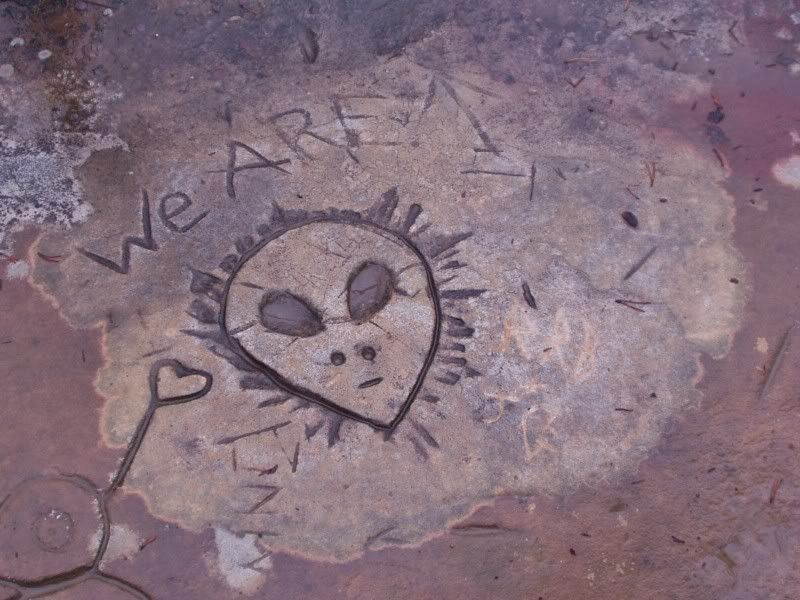
Photo above: Scenes such as this at Kentucky's Red River Gorge inspired the Leave No Trace Center for Outdoor Ethics to declare the area its first Hot Spot.
To celebrate the outdoors, teach minimum impact skills and ethics, and highlight the Leave No Trace's naming of Kentucky's Red River Gorge a Hot Spot, the state park system has declared the May, 2010, Leave No Trace month. During the month of May, the Kentucky State Parks has provided 30-minute “Leave No Trace” outdoor ethics training sessions for all hikers, horseback riders, cyclists and outdoor enthusiasts.
These free workshops are among the objectives promoted by the Kentucky Recreational Trails Authority, Department of Parks and Office for Adventure Tourism to support responsible recreation in Kentucky. In their words, they say of the Leave No Trace program: "As part of the web of life that surrounds us, Leave No Trace teaches us how to responsibly interact with nature, how to handle encounters with wildlife, follow trail routes, the proper use of materials, supplies and containers to take along and why."
For more information, contact: Gil Lawson at 502-564-4270 ext 168 or visit www.getoutKY.com.
Thursday, May 13, 2010
First Leave No Trace Hot Spot: Red River Gorge
CONTACT: Sarah Folzenlogen, Leave No Trace Center for Outdoor Ethics
303/442-8222
Sarah@LNT.org
Leave No Trace Center for Outdoor Ethics Selects Inaugural Hot Spot to Raise Awareness for Areas with Critical Recreational Impact
Designates Red River Gorge in Kentucky as First “Hot Spot”
Boulder, Colorado (May 12, 2010) – The Leave No Trace Center for Outdoor Ethics (The Center) today announced the selection of its first “Hot Spot”, as part of an initiative to raise awareness for areas impacted by recreational use. Seeking to make a difference nationwide, The Center created the Hot Spot Program as a public call to action in which individuals, land managers, and communities can rally for support from Leave No Trace to protect their local recreational resources. The Center will assess nominated areas and select two sites in 2010 as the recipient of programs to reduce impact and increase awareness of how to enjoy the outdoors responsibly.
To kick-off the initiative, The Center designated the Red River Gorge, a National Natural Landmark managed by the USDA Forest Service, as its first “Hot Spot”. The Leave No Trace Center for Outdoor Ethics will assist land managers at the Red River Gorge, and future designated Hot Spots, to reduce recreation-related impact through outreach and education, and collaborating locally with motivated individuals, groups, non-profit organizations, and governmental agencies.
Located in eastern Kentucky near several urban areas, the Red River Gorge is home to high sandstone cliffs, waterfalls, natural stone bridges and arches, enjoyed by countless hikers, rock climbers, and recreational users. Much of the Gorge is located within the Daniel Boone National Forest and is managed to protect its watersheds, wildlife, archaeological resources, and spectacular geologic features. The Center chose the Red River Gorge as a Hot Spot due to several recreation-related impacts including litter, trail erosion, damage to vegetation, and vandalism of property, natural features, and cultural/heritage sites within the Gorge.
The Red River Gorge was recently the focus of an intense planning effort known as the Limits of Acceptable Change process (LAC). The LAC process brought together a diverse group of concerned citizens that worked together with the Daniel Boone National Forest to chart a course toward improving the condition of the Red River Gorge. The need for increasing the effectiveness of Leave No Trace education was an important focal point of this group.
In many recreational areas impact is often a result of unintentional harm to the environment, or due to a lack of knowledge and skills of how to conserve wild places. The Center currently implements programs and initiatives to educate recreationists on how to prevent unintended impacts and protect natural resources. The Hot Spot program will select areas in need depending on a variety of recreational impact criteria.
As the scope of work at Red River Gorge begins to take shape, The Center will publicize volunteer opportunities, upcoming events and trainings as well as ways the public can get involved.
For questions about the program or for more specific information, please contact hotspots@LNT.org, call 1.800.332.4100 or visit http://lnt.org/01_community/hotspots.php
About the Leave No Trace Center for Outdoor Ethics
The award-winning Leave No Trace Center for Outdoor Ethics is the international leader in sustainable recreation practices. The nonprofit organization teaches children and adults vital skills to minimize their impacts when they are outdoors. Leave No Trace is the most widely accepted outdoor ethics program used today on public lands across the nation by all types of outdoor recreationists. For more information about Leave No Trace, visit: www.LNT.org.
Wednesday, May 12, 2010
Dear Education Department: Activate, Volunteer, Advocate
Dear Education Department,
I recently visited your organization’s website and remember hearing about the Leave No Trace principles years ago at summer camp. Anyway, I am very interested in what you do and would like to get involved. I was wondering if there are any volunteer opportunities? I do not live in Colorado so I was looking for something that I could get involved with more locally.
Thanks for your help,
Enthusiastic Volunteer
Dear Enthusiastic Volunteer,
Thank you for your email! We love hearing about people getting involved in their local communities. The Leave No Trace program relies heavily on volunteers—conducting workshops, attending outdoor events, doing school presentations and setting up informational booths. Here are some tips for ways that you can get involved with Leave No Trace as a volunteer:
1) Contact your State Advocate. Their information is available on the state Community Pages. Often Advocates receive multiple event requests at a time and could use the help of extra volunteers.
2) Get involved with the Leave No Trace Hot Spot program. The program is aimed at improving the condition of a designated “Hot Spot” or recreational area that is experiencing multiple visitor created impacts. The current site the Center is working on is the Red River Gorge in eastern Kentucky. More sites will be determined in the coming year and a list of all other Hot Spot applicants will be listed on the Hot Spot page with contact information on how to get involved.
3) Get involved in national initiatives/events. An example is National Get Outdoors Day on June 12, 2010, an event aimed at getting kids and families outdoors by introducing them to local resources and providing a host of hands on activities to teach them about outdoor recreation how to care for our natural resources. Many metropolitan areas around the country will be celebrating this event and all are looking for volunteers.
4) Take part in our Bigfoot Challenge. One of our most recent Challenges is a PEAK and Teen Activity Submission Contest. If you are an educator that has a great idea for teaching kids about Leave No Trace submit your activity. See the side bar for details.
5) Finally, stay tuned for our upcoming volunteer registry. We will now have a way for folks to express their interest in volunteers and get them connected with each other and with local events.
Thanks for all your support!
Sincerely,
Education Department
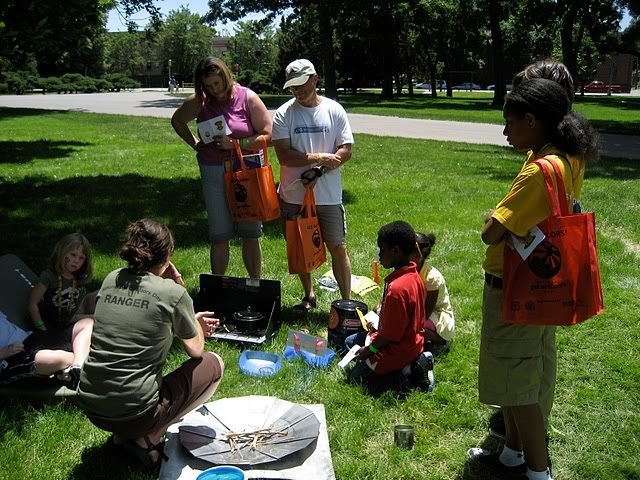
Photo: Volunteering at the National Get Outdoors Day event in Denver last year.
Monday, February 15, 2010
Team East joins Alabama State Advocate Skip Essman
 After a snowy couple of days in Atlanta, GA we traveled down to Prattville, AL, a small town outside of Montgomery, to be guest speakers at a Leave No Trace Trainer Course led by Alabama State Advocate Skip Essman. The course was held at Camp Tuckabatchee, a beautiful scout camp outside of town. We were asked to speak to the nine participants, as well as other Leave No Trace Master Educators and Trainers who were there to assist in instruction, about the Traveling Trainer program and new initiatives launched this year including Leave No Trace Hot Spots and the Bigfoot Challenge. We would like to thank Skip for inviting us to the course and for all his hard work throughout the year as the state advocate! We look forward to working with Skip again on Tuesday, when he will join us at the University of Alabama in Birmingham for an awareness workshop.
 Happy Adventuring...Kate and Tracy
Subscribe to:
Posts (Atom)


 Posts
Posts


