Friday, April 30, 2010

A Grand Adventure - By Holly Dickinson


As a child standing on the north rim of the Grand
Canyon, I thought how magnificent and vast was the
sight. As I looked toward the south rim, I remember
saying to myself, “I can’t believe there are actually people
who hike all the way to the bottom of the canyon with all
their gear on their backs. That’s crazy! Who would do
that?” I may have even voiced these sentiments to my
family at the time, but my afterthought was that even though
it seemed ridiculous, it would be really cool. Secretly I
harbored the wild idea that I would like to do the same thing
one day, but could never openly admit it to anyone, even to
myself.

As an adult, I was introduced to backpacking. Maybe
subconsciously I was inspired by that long ago childhood
memory, and therefore motivated to learn this new skill. To me
backpacking meant adventure, and I wanted more adventure in
my life. I also wanted to be able to share the exciting activities
with my son, three daughters and husband throughout our years
of scouting.

At some point, during all the backpacking years, I came to
realize that not all people backpack with the same outdoor
ethics. I had believed that the way I learned was “THE” way, and
was actually disappointed that not all outdoor enthusiasts
followed the same guidelines. My backpacking trainer, Jack
Kelly, taught me the Leave No Trace approach. Realizing that
there are different methods, I am still pleased that my training
was done in this manner. The same year I learned to backpack,
I also took a Trainer Course in “Leave No Trace, Outdoor
Ethics”, which supported and built on everything I had already
gained knowledge of from Jack.

After years of backpacking, receiving and delivering outdoor
training, and 13 years of scouting, the opportunity was offered to
me to attend the “Master Educator, Leave No Trace, Train the
Trainer” course. I was thrilled! I looked into various locations
where the course was being held. The closest training to me
involved a backpacking trek into the Grand Canyon for five days.
As I saw the listing, my heart began to race with a strange
exhilaration. My mind flashed back to that moment on the North
Rim as a child; I remembered that I had considered it ridiculous
for people to carry their gear on their backs to the bottom of the
canyon. Now I was actually thinking of embarking on a similar
adventure myself.

Well, that difficult and inspiring journey into the Grand
Canyon DID take place and I participated. It certainly was a
grand adventure. I learned a lot about myself, took 403 pictures,
and had an exceptional, life-changing experience.
In addition to learning things about myself, I acquired skills
to better teach others, shared in the incredible beauty of the
canyon at every turn, made friends who came to take the Master
Educator course from all parts of the U.S., and learned amazing
things about the Leave No Trace ethics.

I have discovered that few people know what “Leave No
Trace” really means. I may not have come to an understanding
myself, if Jack had not introduced me to the ethics. Most
people think “Leave No Trace” simply suggests that we should
not leave anything behind us in the outdoors. It does mean that,
but is so much more.

Leave No Trace, Center for Outdoor Ethics, is actually a
non-profit organization that helps bring awareness to people
about taking on personal stewardship for the land. This is done
through seven simple principles, which if learned and followed
can make such a difference on how much impact we make on
the outdoors. Some guidelines are very simple, like carrying out
our own trash. There are other methods that can benefit the eco
system, like when and when not to have a campfire and what
type of fire to have.

I have noticed that people often do things the way they have
always done them or the way they first learned to do them. They
may not even realize that there are different ways of interacting
with nature. A lot of damage to the land happens because
people don’t know they are impacting the outdoors through
some of their behaviors. Leave No Trace Outdoor Ethics are not
a hardcore set of rules that apply everywhere all the time. In fact,
these ethics are quite the opposite. The outdoor ethics are
simply guidelines, which differ based on the types of terrain, land
ownership and environment (desert, mountain, lake, etc.), and
the type of activity. An activity that is good in one natural setting
may be detrimental in another.

There is not “one way” of doing things, but there are “different”
ways of implementing things. If we could all learn some of
these ways, we would make less of an impact on the lands,
trails, parks, historical sites, and other natural places we visit.
Do you fish? Do you picnic? Do you hunt? Do you geocache?
Do you hike local or backcountry trails? Do you visit
heritage sites? Do you camp? Do you visit state or national
parks? Just about everything we do in the outdoors can have an
impact on the land. So why not find a different or better way to
do some of the recreational activities we do in the outdoors? In
many instances, we do not even realize we have done harm.
I love natural beauty and sharing how to better care for it.
That is why I was excited to accept a sponsorship by the Girl
Scouts, Arizona Cactus-Pine Council, to take the Master
Educator course. The training will allow me to help teach these
principles within their organization and to everyone I possibly
can.

It is my challenge that everyone make a visit to the Leave
No Trace, Center for Outdoor Ethics website at www.lnt.org.
Learn about the guidelines, and maybe even learn a new way of
doing what we do in the outdoors. The land is there for us to
enjoy. Let’s take good care of it.

I now have a better appreciation for that childhood day on
the North Rim. It led me to a Grand adventure, and for Grand
reasons.

- Holly Dickinson
Leave No Trace Master Educator, Az Girl Scout Cactus-Pine Council Adult Education Facilitator, Girl Scout multi-level Troop Leader, Silver Beaver Award Recipient of Boy Scouts of America, National Wildlife Federation BOW (Becoming Outdoor Women) Instructor, Wife and Mother of 4 children, 14 years volunteer of Boy Scouts and Girl Scout youth programs.

Clean Concert Pledge - What will you do this festival season?

I took the Clean Concert pledge. CleanConcert.org

One of my favorite times of year is quickly approaching: Festival Season. Good music, great friends, beautiful weather... all coming together for weekends throughout the summer of beautiful outdoor experience.

What's good for me to remember is that this time spent outdoors is not that different from any trek, climb or paddle I will do this summer, and these festival areas have the potential to see staggering amounts of damage from such high usage.

One way that we can help to bring additional awareness to festival season and our cumulative impact in these areas is to visit www.cleanconcert.org. This is a new website where individuals can educate themselves on the ways in which they can minimize their impact while attending festivals, and join hundreds of others in pledging to be a low-impact festivarian this summer.

Check it out, and happy festival going!

Thursday, April 29, 2010

2010 AEE Heartland Conference


The 2010 Association for Experiential Education Heartland Regional Conference was recently held at the YMCA of the Ozarks/Camp Lakewood near Potosi, MO. Nearly 80 people from 6 states showed up for three days of beautiful weather, educational workshops, entertainment, and F-U-N. We were lucky enough to be joined by vendors/exhibitors like Missouri State Parks, Leave No Trace, the Rainforest Adventure Center, TEAM Works, Going Green Promotions, OWLS, Achievement Transition Group, and the Old Raccoon.

As if workshops by Laurie Frank and Tom “Old Raccoon” Smith weren’t enough, other highlights of the 2010 Heartland Conference included a Keynote Address by Seth Warren and the Adventure Film Festival as the Saturday Evening Entertainment. Seth is a former professional kayaker turned multi-award winning filmmaker. His films Oil & Water and Nature Propelled have won awards all over the world and both films were highlighted in the Film Fest.

To top it all off, we had numerous donors that were very generous this year and helped raise over $3500 through our Silent and Live Auctions. Companies like Going Green Promotions, KEEN, National Geographic, RESTOP, LARABAR, The North Face, REI, and many others donated products to benefit the AEE.

Emily & JD

(Leave No Trace members and former Subaru/Leave No Trace Traveling Trainers)

PEAK training in Las Vegas


From conference rooms to warehouses... the setting at REI may change, but the audiences all come to learn about Leave No Trace and the Center's PEAK program. This week we stopped at two REI's in the Las Vegas area to teach representatives from the area's many youth-serving organizations and land management agencies and REI employees all that the PEAK and Teen packs have to offer.


In the first photo, Jason is going over learning styles and teaching techniques at the Boca Park store, and in the second picture, the audience is trying out the rule of thumb to judge a safe distance from which to observe wildlife in the Henderson store.

A special thanks to Eric Larsen, the Las Vegas Outreach Specialist, for all his hard work in putting these two events together.

All the best....

Agata and Jason

Wednesday, April 28, 2010

Earth Day...the Blanchard Elementary Way!

In celebration of Earth Day, we dusted off our Traveling Trainer shoes (Chacos in our case) and headed to Blanchard Elementary School in Cape Girardeau, Missouri. Borrowing the school’s playground, we met with the entire second grade to talk about LITTER! Using one of our favorite activities from the PEAK Pack, we were able to learn a little about Leave No Trace and have fun at the same time.

We were very impressed with the ideas that the students shared on ways that we could Reduce, Reuse and Recycle our trash.

After our presentation, Ms. Harper invited us to her classroom where her students showed us some ways to be great citizens of our planet! They had such great ideas, that we wanted to share a few of them with everyone!

We wanted to give a BIG THANKS to all the second grade students and their teachers for spending Earth Day with us! We really appreciated your interest in Leave No Trace and your excitement for protecting our environment!

Emily & JD

(Leave No Trace members and former Subaru/Leave No Trace Traveling Trainers)

Tuesday, April 27, 2010

Las Vegas Mega Scout Expo


On Saturday, April 24th, we attended the Mega Scout Expo in Las Vegas to celebrate the 100th anniversary of scouting. This 3-day event in Sunset Park included 3,000 campers throughout the park, campfire programs, fishing in Sunset Park Lake, hundreds of booths, and a merit badge midway.

About 200 scouts, parents, and leaders visited our booth and enjoyed Leave No Trace trivia, learning more about the Bigfoot Challenge, and receiving prizes for picking up trash stashed around the park.

All the best,

Agata and Jason

Take the Kickstand Kickstart Challenge!


Robb Shurr, pictured above, and our friends at
Kickstand, a change-marketing firm in Boulder, Colorado, are generously including Leave No Trace in their newest initiative – the Kickstand Kickstart Challenge. Through the project, they are encouraging people to make environmentally smart changes to their everyday live, and they're donating $2 to Leave No Trace for everyone who takes that challenge:

Here’s how it works. Take inventory on the areas of your life that you want to change (this will be different for everyone—we’re not telling you how to change or what to change, that’s up to you to decide—but here are some ideas): eat more local food, minimize the packaging in your food choices, start composting, drive your car less, turn down your heat/AC, change your light bulbs, eat more organic food, weatherproof your house, etc.

Pick 3-5 things that you think you can tackle in one month from May 8 to June 5.

Apply. Tell us why you would be a good fit for this experiment and what your goals are, big or small. Include the below application information and email it to us by May 1 to be considered.

We’ll select 10 families and individuals across the country and you’ll be given a $50 kickstart. We’ll let you know by May 5 if you’ve been selected.

If you’re selected, we’ll send you a guide to help you record your experience. You’ll write about your (and your family’s) experience while documenting the voyage with pictures and videos for four weeks from May 8 to June 5. Once a week, you’ll email us your weekly journal entry and photos and videos. By the end of the month you’re left with a smarter lifestyle (or go back to the way you were living before but you’ve had an interesting experience).

Kickstand has a long history of Leave No Trace professional support and advocacy. To learn more about them and the Kickstand Kickstart Challenge visit the Kickstand website.

Monday, April 26, 2010

Earth Day 2010

The Central Florida Earth Day celebration that took place in Orlando, FL this past weekend was filled with earth-friendly environmental education and entertainment. An estimated 20,ooo people attended the event in Lake Eola Park. We enlisted people to take the Bigfoot challenge at our booth. April's first challenge from Bigfoot is to tell us what Earth Day means to you. The day was full of interesting conversations around the importance of Earth Day over the last 40 years. Earth Day is a critical day of awareness, as we were humbly reminded to think globally and act locally. "Earthday is Everyday!" was a commonly heard phrase throughout the day. We concur.
Happy Adventuring...Kate and Tracy

Spring Fly Fishing

The fish in Colorado are finally waking up! It's been a long cold winter but the days are getting longer, the snow is starting to thaw, insects are hatching and the fish are biting. I spent the day on the water yesterday and was lucky enough to catch a grand slam - rainbow trout, brown trout, cutthroat trout and brook trout. Nothing fancy but a good sign of warmer days and more fly fishing to come.

Greenback Cutthroat Trout


Brook Trout


Brown Trout


Rainbow Trout


When it comes to angling, Leave No Trace is just as important as it is for other outdoor pursuits. Here are a few things to keep in mind:

Plan Ahead and Prepare
-Know the local fishing and boating regulations for the area where you’ll fish. Obtain licenses and stamps and have them with you.
-Use a personal flotation device where required and/or appropriate.
-Learn to identify the different species of fish in the area where you’ll be fishing.
-Obey the limits on size and quantity of fish you are allowed to keep. Abide by regulations concerning types of bait and tackle permitted where you are fishing.
-Prepare for extreme weather, hazards, and emergencies.
-Plan your trip to avoid times of high use.

Travel and Camp on Durable Surfaces
-Durable surfaces include rock, gravel, water, established trails and campsites, sand, or snow.
-Concentrate use on existing trails, campsites, and boat launches.
-Focus activity in areas where vegetation is absent.
-Avoid trampling aquatic vegetation when wading. Refrain from wading in spawning areas when possible.
-Enter and leave water sources at places where the banks are low or where there are gravel bars.
-In pristine areas disperse use to prevent the creation of new campsites and trails.
-Protect riparian areas by camping at least 200 feet from lakes and streams.

Dispose of Waste Properly
-Pack it in, Pack it out. Inspect your camp and rest areas for trash or spilled foods. Pack out all monofilament fishing line, leftover live bait, and bait cups.
-Avoid using lead sinkers and jigs. If lead sinkers are found, pack out for proper disposal.
-Use established bathrooms when available. If not available, deposit solid human waste in catholes dug 6 to 8 inches deep and 200ft away from water sources.
-Check with local land managers for regulations on disposal of fish entrails. Pack out entrails when possible. If not possible, burial, deepwater deposition, or moving water deposition are acceptable options in most areas.
-To wash yourself or your dishes, carry water 200 feet away from streams or lakes and use small amounts of biodegradable soap. Scatter strained dishwater.

Leave What You Find
-When practicing “catch and release”, use barbless hooks and be sure to not injure the fish. Do not fight a fish to exhaustion, use a rod and line of sufficient strength, avoid suspending fish out of water by the fishing line. Keep fish in water when handling for release and do not touch gills.
-Carry and use needle-nose pliers or hemostats for hook removal.
-Take care not to introduce non-native species to water sources and surrounding areas. Pack out all un-used bait and dispose of properly (e.g. worms, minnows, leaches) and properly wash all equipment between fishing trips.
-Avoid transferring fish from one watershed to another.
-Preserve the past: observe, but do not touch, cultural or historic structures and artifacts.

Minimize Campfire Impacts
-Campfires can cause lasting impacts. Use a lightweight stove for cooking when possible.
-Where fires are permitted use established fire rings, mound fires, or fire pans and consider bringing your own firewood.
-Keep fires small and use only dead and downed wood that can be broken by hand.
-Burn all wood and charcoal to ash. Ensure that fire is completely out and properly dispose of cold ashes by scattering or packing out.

Respect Wildlife
-Respect fish by humanely dispatching catches you are keeping with a quick blow to the back of the head with a rock or other solid object.
-Refrigerate or eat fish quickly to avoid wasting them. Check local regulations on using stringers.
-Use caution when cooking fish in bear country.
-Never feed wildlife. Feeding wildlife damages their health, alters natural behaviors, and exposes them to predators and other dangers.
-Control pets or leave them at home.

Be Considerate of Other Visitors
-Respect other visitors and protect the quality of their experience.
-Non-motorized crafts usually have right-of-way over powerboats: slower boats should keep to the right.
-If using a radio keep volume low or wear headphones, let nature’s sounds prevail.
-Pick campsites that are away from shoreline or trails and avoid crowding other visitors.

Friday, April 23, 2010

We're Hiring: Information Coordinator Position Announcement

Information Coordinator Position Announcement
April 22, 2010

Leave No Trace Center for Outdoor Ethics
1830 17th Street, Suite 100
Boulder, CO 80302

Position: Information Coordinator
Hours: Full Time, 40 hours per week
Compensation: $22,000 - $23,000 annually + benefits
Send resume and cover letter to: employment@LNT.org
Please no calls.

The Leave No Trace Center for Outdoor Ethics is seeking a dynamic new individual to join our team. If you are interested in working for one of the premier non-profits in the outdoor industry, read on.

The successful applicant will like to both work and play hard. Staff at the Center take a great deal of responsibility for their individual roles, thrive in a team oriented atmosphere, and always make time for their favorite outdoor pursuits.

Additionally the Information Coordinator position will require you to be
detail oriented, self-motivated, highly organized, a great communicator (both written and verbal), computer proficient (we love Macs), and able to manage a wide variety of tasks.

If you have the comfort and desire to continually ask “What else can I do?”, you will thrive.

The Information Coordinator will be primarily responsible for the following:

Fulfillment of educational materials orders - 65%
a. Manage daily orders of materials and merchandise
b. Assure all orders are shipped efficiently and timely
c. Maintain orderly inventory room
d. Reconcile daily shipments to bank deposits

Program Support – 10%
a. Manage materials requests for Traveling Trainers, and State Advocates and other programs as necessary
b. Processing requests for Certificates of completion for Trainer and Awareness Courses, including working with 3rd party mailer
c. VIP program: check membership status of people who want to participate in the VIP Program, and process requests
d. Additional programmatic support when needed

Partnership Support - 10%
a. Data entry of new & renewing partners
b. Fulfillment of partnerships
c. Inventory & ordering of partnership materials
d. Other assistance as necessary, including database maintenance

Office Management - 15%
a. Phone
b. Mail/Post Office
c. Office Supplies - Keep track of all inventory levels i.e. Letterhead, labels, paper, etc, restock when necessary
d. Respond to general information requests via email and phone

The Leave No Trace Center For Outdoor Ethics does not discriminate on the basis of race, color, gender, gender identity, sexual orientation, national or ethnic origin, age, religion, marital status, military status or disability in the administration of its education, outreach, employment, and other Center administered programs and activities.

Earth Fest Boulder

Earthfest Boulder is a complete celebration of sustainability and community on Sunday, April 25th, 2010 in honor of Earth Day. Earthfest is a combination of activities including, live music, the 5th Annual Dirt Day Adventure Challenge and Expo, and the Kids Cruiser Parade. In addition, there are hands-on family activities, such as: leave-no-trace clinics, renewable energy demos, live music, fly fishing and climbing classes, and plenty of good local organic food! We hope to see you there.

Date:
Sunday, April 25, 2010
Time:
11:00am - 4:00pm
Location:
Downtown Boulder
Street:
Broadway and Canyon
City/Town:
Boulder, CO

For more information please visit: http://www.earthfestboulder.net

Thursday, April 22, 2010

Earth Day Turns 40!


The following is reprinted from the Wall Street Journal.

APRIL 17, 2010
Milestones in Green Consuming
From the new-car lot to the recycling bin
By WILLA PLANK

Since the first Earth Day, consumers increasingly have sought out products or services that promise to improve the environment. This has helped bring us automobiles that burn less gasoline and light bulbs and appliances that use less electricity. And it has ushered in programs that seek to recycle more of our waste.

Here's a look at a handful of milestones in the history of green consuming.

Fuel Economy

In 1973, U.S. cars averaged 13 miles per gallon of gas, according to the Department of Transportation. After the 1973-74 Arab oil embargo, the government began setting fuel-economy standards to get auto makers to make more fuel-efficient vehicles—and to get consumers to buy them. Now each new car and truck sold in the U.S. bears a sticker showing its estimated city and highway gas mileage—figures that have been an important part of many consumers' vehicle-buying decisions.

For the 2011 model year, the federal standard requires each auto makers' vehicles to average at least 27.3 mpg; that will rise to 35.5 mpg in 2016.

Recycling

One of the first targets of green consumers was garbage—specifically, all the cans, bottles and newspapers that could be recycled instead of dumped in landfills. A few cities in California and the Northeast had curbside recycling programs in the mid-1970s. By 1978, there were more than 200 curbside recycling programs, says Martin Melosi, author of books on urban environmental history. As of 2008, there were more than 8,600 programs, the Environmental Protection Agency says.

At first, the programs recycled mainly old newspapers; plastics and cans were added to the mix during the 1970s. More recently, some programs, including San Francisco's, have added food waste, which gets composted.

Compact Fluorescent Light Bulbs

The first CFL was sold in the U.S. as early as 1980, in response to demand for energy-efficient lighting after the 1970s energy crises. But they didn't make a splash in the market until the late 1990s, when prices began to fall. An Energy Star-qualified bulb today, which costs from $1 to $3 more than comparable incandescent bulbs, use 75% less energy and lasts 10 times as long. An Energy Star CFL now will pay for itself in about six months.

Congress has required older incandescent bulbs to be phased out by 2012, but CFLs may prove to be only an interim answer to more efficient lighting from fixtures using light-emitting diodes or even advanced incandescent bulbs.

Energy Star

The Energy Star program was introduced in 1992 by the EPA to increase the energy efficiency of household products and appliances and reduce their greenhouse-gas emissions. (A typical house produces twice the greenhouse emissions of a car.) The first targets were computers and monitors. Today, the program covers more than 60 kinds of products, including televisions, washing machines and furnaces.

To qualify for Energy Star certification, a product has to be more energy-efficient—10% to 80% more efficient, depending on the item—than the federal minimum for its category. Since 2000, consumers have purchased three billion Energy Star products, according to the EPA. And the agency estimates that the products saved U.S. consumers $17 billion on their energy bills last year.

Hybrid Vehicles

In 1999, Honda Motor Co. introduced the first hybrid gas-electric vehicle in the U.S., the Insight. A year later, Toyota Motor Corp. followed with the Prius, whose distinctive hatchback shape (starting with the 2004 model) has become an emblem of green driving. The Prius is the most fuel-efficient car sold in the U.S, with an EPA combined fuel-economy rating of 50 mpg. Last year, Toyota sold nearly 140,000 Priuses in the U.S.

Ford Motor Co., General Motors Co., BMW AG and others have also joined the hybrid parade. Still, the category makes up only about 3% of the light-vehicle market.

Ms. Plank is a staff reporter for The Wall Street Journal in New York. She can be reached at willa.plank@wsj.com

Texas Volunteers Meeting

On Saturday April 17th we met with various Leave No Trace volunteers, educators, and the State Advocate Mr. Griff C. Danheim in Austin, Texas. The meeting served as a forum to discuss Leave No Trace programs and trainings statewide and streamline communication between volunteers and the Center for Outdoor Ethics. Dan Hayes, Outdoor Education Specialist for Texas Parks and Wildlife, educated our group about programs like the Texas Outdoor Family program that teaches frontcountry camping skills and the principles of Leave No Trace to families.

The opportunity to hear from youth serving organization leaders and individuals interested in education around responsible outdoor recreation in Texas was very interesting and we send a warm "thank you" to all in attendance last weekend.

All the best,

Jason and Agata

Happy Earth Day!

(Cut and paste this into an email to your boss)

Dear (your boss’s name here), (your name here) can’t make it into work today because they have been chosen for participation in Earth Day. You may have not heard of it before but it’s sort of like jury duty so you can not penalize (your name here) for not being at work today. Kind Regards, Leave No Trace

(note: Leave No Trace takes no responsibility for any misunderstandings this may cause)

Tolerance levels

When you're on the trail, how tolerant are you of certain Leave No Trace-ish issues that aren't always black and white for all people? A great example is orange peel or apple core droppings. Some people feel that since they're natural, they're OK left on the trail. What about about this photo:


Or this:


There are a lot of grey areas with Leave No Trace. How tolerant are you?

Wednesday, April 21, 2010

National Park Free Days

How many alligators do you count?

From now through April 25th, entrance fees for all 392 National Parks in the United States will be waived. This week presents a perfect opportunity to venture into any of those National Park units that you have been meaning to explore, but haven't quite made the time to. With Earth Day right around the corner and no entrance fees to National Parks, get outside and strengthen your connection with nature! Team East has been doing just that as we have been paddling and hiking in both Biscayne National Park, as well as, the Everglades in Florida. Here are a couple of photos from our adventures:

Happy Adventuring...Kate and Tracy

‘Chunky soup’ of plastic trash in Atlantic

Researchers tracking garbage in the Atlantic last February came across this collection of plastic debris on Portugal's Azores Islands.

By MIKE MELIA

SAN JUAN, Puerto Rico - Researchers are warning of a new blight on the ocean: a swirl of confetti-like plastic debris stretching over thousands of square miles in a remote expanse of the Atlantic Ocean.

The floating garbage — hard to spot from the surface and spun together by a vortex of currents — was documented by two groups of scientists who trawled the sea between scenic Bermuda and Portugal's mid-Atlantic Azores islands.

The studies describe a soup of micro-particles similar to the so-called Great Pacific Garbage Patch, a phenomenon discovered a decade ago between Hawaii and California that researchers say is likely to exist in other places around the globe.

Read the rest of the article from msnbc.com here.

Tuesday, April 20, 2010

"The first rule of intelligent tinkering...

...is to keep all the pieces." This bit of wisdom was shared on a recent Trainer Course during a lesson around the principle of Leave What You Find by our friend and newest trainer Mr. Randy Hale, educational specialist from the Wichita Mountain Wildlife Refuge in Oklahoma. Randy demonstrated the power of peer teaching on Trainer Courses through the use of the pictured "Hooey stick" and above mentioned Aldo Leopold quotation to name a few of his time tested teaching skills.

The course was comprised of land management professionals from a variety of recreational, historic, and memorial public lands from across the plains of Oklahoma. Each participant was responsible to teach a Principle of Leave No Trace as well as learn more about the various educational programs like our PEAK and TEEN packs for working with audiences of all ages. There was some casual debate whether or not the group had more fun in the field teaching and learning together or sharing personal stories from years gone by. Gratefully we did not have to decide and everybody parted ways excited about teaching Leave No Trace in the public lands of Oklahoma.

All the best,

Jason and Agata

Monday, April 19, 2010

Texas Parks and Wildlife Department Trainer Course


This past weekend marked our 4th trainer course in three seasons with the Texas Parks and Wildlife Department (TPWD). The relationship between TPWD and The Leave No Trace Center for Outdoor Ethics continues to strengthen each year. We appreciate all the hard work that Chris Holmes, Outdoor Education Director for Texas State Parks, has put in over the years to make this partnership thrive.

We also experienced a very rare occurrence this weekend. Team East and Team West met up at Buescher State Park. Typically, teams are dutifully criss-crossing their respective sides of the country and it is "as scarce as hen's teeth" that teams get together during the season. We got to swap stories over coffee before each team was back at it, heading in opposing directions until we meet up again in July to switch sides of the country.

Happy Adventuring...Kate and Tracy

CSU's Warner College of Natural Resources Hosts Leave No Trace Center for Outdoor Ethics Adventure Film Festival

The Warner College of Natural Resources College Council presents the "Leave No Trace Center for Outdoor Ethics Adventure Film Festival" Sponsored by CSU's School of Global Environmental Sustainability Student Sustainability Center and CSU's Outdoor Adventure Program.

When: Tomorrow! April 20, doors open at 6:45 p.m., Introductions at 7:15 p.m., Films start at 7:30 p.m.

Where: Colorado State University's Lory Student Center Theater

What: Films will feature various adventure, humanitarian and sustainability themes.

Why: All proceeds from the event go to the Leave No Trace Center for Outdoor Ethics, an educational non-profit organization dedicated to the responsible enjoyment and active stewardship of the outdoors by all people, worldwide.

Tickets are $5 and available as of April 1st at the Lory Student Center Box Office or online at http://csutix.universitytickets.com/.

Special Thanks During National Volunteer Week


Here is a standing ovation from everyone here at the Leave No Trace Center For Outdoor Ethics to the thousands of volunteers passing on Leave No Trace Education in your communities. This program would not thrive without the countless hours volunteered by our Board of Directors, the State Advocates, Master Educators, Trainers and countless others.

The "Leave No Trace" message depends upon the donations of time by you, and everyday we are grateful for the work you do and the interactions we have with you.

Did you know that National Volunteer Week was established in 1974 to inspire, recognize and encourage people to seek out imaginative ways to engage in their communities. It’s about demonstrating to the nation that by working together, in unison, we have the fortitude to meet our challenges and accomplish our goals.

The success of the Leave No Trace program would not be possible with out you! Cheers!

Friday, April 16, 2010

B.Y.O.B. - A Restop Affair


(With special thanks to guest blogger - Lara Usinowicz)
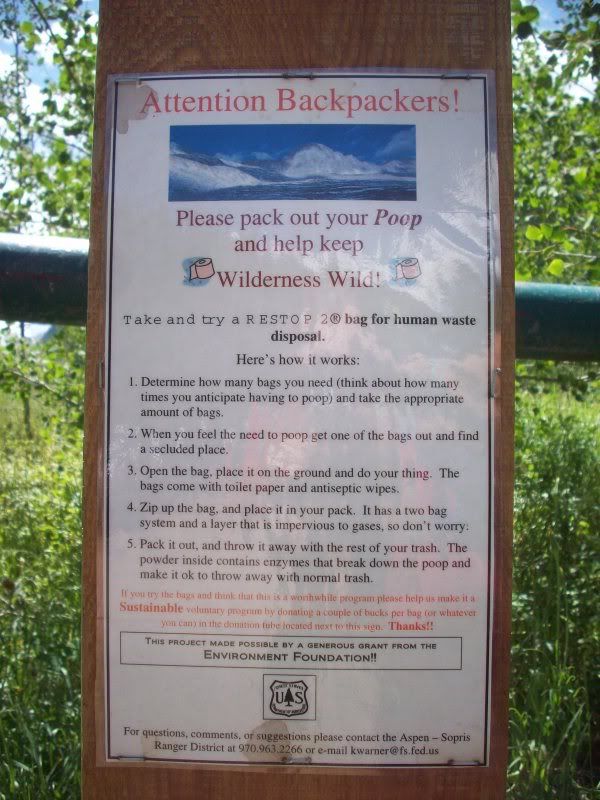
Attend a National Park, Forest Service, or BLM meeting and the topic that seems to garner the most attention is…yep, you guessed it…poop in the woods. These agencies have plenty of other issues to worry about other than how to manage YOUR poop! Some areas have implemented “pack it out” programs where land managers provide a “poop bag” with your backcountry permit but this puts the cost of implementation and management of a backcountry waste management program on the land managers. You wouldn’t expect a Forest Service or National Park Ranger to pack out your trash and human waste should be treated as just that…part of the trash you are responsible for taking with you.

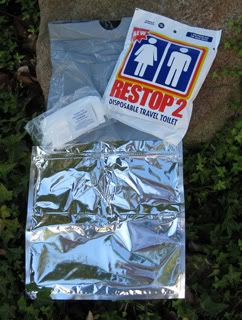
You can easily and effectively take on that responsibility and BYOB (bring your own bag)…a Restop 2 bag, that is!
The Restop 2 solid waste bag provides a safe, sanitary and inexpensive means to transport solid human waste from sensitive wilderness areas. The outer bag is gas-impervious, thereby containing the odor, a significant issue if one is expected to “pack it out.” Inside the bag is a powder, a polymer/enzyme blend, that processes the waste so it is approved for trash disposal. The Restop 2 bag is designed to be used with a Restop Commode in a base camp situation or, in the backcountry, can be used directly on the ground. For a more discreet experience, it can also be used with the Restop Privacy Shelter.
Be a part of a good “movement” and pack out your poop. The Restop 2 bag is being used from Grand Teton to Mount Everest as an effective backcountry waste management solution and should be a part of your packing list when you head into the backcountry.

We can all take responsibility for ourselves in the backcountry or we can let it go to…

For more information, contact Lara Usinowicz. (303) 746-2790 lusinowicz@restop.com

Thursday, April 15, 2010

Bigfoot Challenge Winner for February!

Each month we are randomly selecting one person who took the Bigfoot Challenge and awarding them for their efforts with product from our partners. In February Leave No Trace member Patrick Beezley was our winner. Patrick wrote us to tell us more about how he practices Leave No Trace and gets involved in his local community.

Hi Leave No Trace,

I am Patrick Beezley from Carbondale, IL. I enjoy rock climbing, backpacking, whitewater kayaking, mountain biking, canoeing, hiking, and traveling. I work for Southern Illinois University as a grad assistant. I appreciate what Leave No Trace promotes. I think outdoor areas that people spend time in will be better off if more people know about Leave No Trace skills and techniques. I volunteer my time to Leave No Trace to help promote it so others can learn to take care of the places that they enjoy. For my Bigfoot Challenge, I walked through the middle of the trail versus walking over to the side. Taking the challenge made it easier to focus on hiking in the middle versus hiking around. Leave No Trace helps me do something beneficial for the wilderness areas that I travel in.

The best part about Leave No Trace education is knowing that you are helping out wilderness areas and the people that enjoy them. I think focusing on teaching kids Leave No Trace would be beneficial. That way people would grow up using the principles and it would be second nature to them.

I hope that people who use Leave No Trace principles when they are out camping can transfer that attitude for the outdoors to finding other ways to take care of the environment.

Thanks Bigfoot, Patrick Beezley

Stay tuned to hear more from the March Winner. Take the Bigfoot Challenge today to get involved and increase your chance to be the April winner of some great outdoor gear.

Get Muddy!!!

This month (and every month in 2010) we are challenging you all to take the Bigfoot Challenge. The Center for Outdoor Ethics is excited to bring these ethics challenges to you each month in hopes that the awareness around the seven principles of Leave No Trace will continue to develop world wide.

In the photo above, a hiker is accepting the challenge to walk directly through a mud puddle rather than around to prevent the development of "social trails" that impact the surrounding vegetation. Following this principle of Travel and Camp on Durable Surfaces allows for the trails we all enjoy recreating on to maintain their intended course and recreational experience.

If you have not already please click on the Bigfoot Challenge and learn more about how you can walk the trail of Leave No Trace today!

All the best,

Jason and Agata

Wednesday, April 14, 2010

Free Entrance to National Parks

Next week is not only Earth Week but also National Park Week! Starting on April 17th through the 25th, entrance fees for all 392 national parks in the United States will be waived. Many national parks have organized special events and volunteer activities in preparation for the week.

In addition, April 24th is National Junior Ranger Day, so next week is a perfect opportunity for kids and people of all ages to earn their junior ranger patches by attending ranger programs, picking up trash, and participating in other activities.

Please visit National Park Week's website for more information about events in your region.

Celebrating Earth Day's 40th Birthday!


Earth Day will officially be over the hill this year! Celebrations across the country will take place in honor of caring for and respecting the earth. This year, Team East will be participating in the 5th annual Central Florida Earth Day, which takes place at Lake Eola Park in downtown Orlando from 10 a.m to 6 p.m on Saturday April 24th. If you are in the area, please come by our booth.

What are your plans for Earth Day? If you are taking part in an Earth Day celebration this year, we want to hear about it! Also, did you know that one of the challenges this month for the Bigfoot Challenge is to take part in an Earth Day event and write us a story about what Earth Day means to you. Sweeten your Earth Day experience by having a chance to win some outdoor gear by taking part in the Bigfoot Challenge and an Earth Day event this month!

Happy Adventuring...Kate and Tracy

Tuesday, April 13, 2010

Girl Scout Jamboree in Arizona

Last Saturday April 10th we were on the Chauncey Ranch just outside of Prescott National Forest for the 2010 Girl Scout Jamboree. The event was a gathering of over one thousand Girl Scout troops and leaders for outdoor education and fun representing the entire state of Arizona.
Pictured above, Agata is at the outreach booth visiting with Girl Scouts who were learning more about the educational programs we teach as Traveling Trainers for Leave No Trace. We were also very pleased to sit in as guests with the Girl Scouts who prepared and led a few activities around the Principles of Leave No Trace to troops from other areas in Arizona. The girls did an excellent job with the presentations and then we shared some additional activities and information during the hour long session.


All the best,

Jason and Agata

Leave No Trace Rap

We came across this incredible little Leave No Trace rap, recently, and contacted Bob Gideon, a California educator who posted it. This is what he said about it.

"It was a program before an overnight backpack in Joshua Tree. I was working for the Naturalists at Large, an outdoor ed company based out of Ventura, CA. We took students of all-ages on week-long trips- I believe these were 7th graders.

The various naturalists divided up all the backpacking prep, and Chris (on guitar) and I were in charge of teaching LNT. I just wrote out the words during dinner that evening, he is a guitar wizard and put the riff to it, and the rest is youtube history, I suppose."

Monday, April 12, 2010

Heard Science Museum Trainer Course


This weekend we were lucky to spend two days at the Heard Natural Science Museum and Wildlife Sanctuary in McKinney, TX to run a Leave No Trace Trainer Course for staff from the museum. It was absolutely beautiful at the Heard, we couldn't have asked for better weather or location. Six staff members from the museum were eager to learn about the program and ways to incorporate the information into the programs they offer at the museum, future trips they will lead, and at home school programs they facilitate. With so many areas of the sanctuary to explore, we had many teachable moments to utilize on the course. During the course, we even got to paddle, night hike, bird watch, and visit the butterfly area, which houses a lemur family and walleroos! We had such a great time at the Heard Museum and look forward to working with Schelly and the crew in the future!
Happy Adventuring...Kate and Tracy

160-Square-Mile Oil Spill Fouls Mississippi Delta Wildlife Refuge


* Coast Guard photo by Petty Officer 2nd Class Scott Lloyd

From http://www.nola.com/news/index.ssf/2010/04/crude_oil_spill_fouls_about_a.html

A crude oil spill covered about one-fifth of a remote national wildlife refuge near the mouth of the Mississippi River on Wednesday, and another 120 square miles in the Gulf of Mexico, the Coast Guard said.

No affected birds or animals had been reported, and more than 50 people and 16 vessels were working Wednesday to clean up the spill from a pipeline through the Delta National Wildlife Refuge, Lt. Stephen Nutting said.

Nutting said the slick covered 16 square miles of the refuge, which comprises about 76 square miles of marshland between the Mississippi River and Breton Sound and the Gulf of Mexico. A 12-mile-wide slick stretched 10 miles into the Gulf of Mexico, he said.

Crews put 5,000 feet of containment boom around the slick and were putting out another 2,000 feet of boom around the environmentally sensitive area near Breton Island, Nutting said. He said skimmer boats had sucked up 600 gallons of oil.

A Berry Brothers General Contractors barge dredging for ExxonMobil U.S. Production Co. in the area notified the Coast Guard Tuesday about 1 a.m. that oil was spilling into a canal about 10 miles southeast of Venice, according to a news release.
About 18,000 gallons of oil spilled before Cypress could close the broken section.

The news release was distributed jointly by the Coast Guard, the state of Louisiana and the pipeline operator, Cypress Pipe Line Co. -- a joint venture between BP PLC and Chevron Pipe Line Co.

Nutting would not comment on the cause.

ExxonMobil has offered to help deal with the spill, company spokesman David Eglinton said in an e-mail.

Friday, April 9, 2010

LNT partners with Promotive.com to thank Master Educators for their volunteerism and advocacy.

As of January 2010, we are proud to say there are over 3500 Leave No Trace Master Educators worldwide representing nine countries and 50 U.S. states. This valuable training is recognized throughout the world by the outdoor industry.


To show our appreciation and thank our Master Educators for all their volunteerism and advocacy, Leave No Trace is partnering up with ProMotive.com. ProMotive.com is an online marketplace for Pros, "Bros" and other VIPs who have significant sales influence within personal and professional communities. This partnership will allow Master Educators who are active members to receive discounts on the gear necessary for training others in Leave No Trace skills and ethics.


If you are a Master Educator and an active member of LNT you may contact me directly for your promotional code. dean@lnt.org


Not a Master Educator Yet? Your support truly does make a difference!
Regardless of the outdoor activity, Leave No Trace skills are important to learn. Leave No Trace courses function like a pyramid. Master Educators are at the top of the pyramid and train people to become comprehensive educators. To learn more about becoming a Master Educator please visit the “Training” section of LNT.org.

Thursday, April 8, 2010

Time for Grasscycling

Yes, finally, it's spring! Time to file out the door and into nature to enjoy that first rush of spring air. For some, this means hitting the trails while others don't make it quite past the backyard. And in the backyard, if you're like many, you've started to work on the greening of your lawn. Hopefully greening can take on two meanings this year: the color and being more environmentally friendly. To accomplish both types of green, try grasscycling. Not only is it good for your lawn and good for the environment - it's also easy. Check out this link and give it a try: http://planetgreen.discovery.com/home-garden/green-glossary-yard-waste.html. If the backyard is as far as you get into the outdoors - enjoy! You're still outside where nature (hopefully) prevails!

New For Master Educators: Exclusive benefits for Master Educator members!

As of January 2010, we are proud to say there are over 3,500 Leave No Trace Master Educators worldwide representing nine countries and 50 U.S. states. This valuable training is recognized throughout the world by the outdoor industry.

To show our appreciation and thank our Master Educators for their volunteerism and advocacy, Leave No Trace is partnering up with ProMotive.com to offer exclusive discounts on outdoor gear & apparel. ProMotive.com is an online marketplace for professionals and affiliates who have significant influence within personal and professional communities.


This partnership will allow Master Educators who are active members to receive discounts on the gear necessary for training others in Leave No Trace skills and ethics. Brands offering discounts with this program are Corporate Partner of Leave No Trace - such as Marmot, Leki and National Geographic Maps - as well as other notable companies in the outdoor industry.


Sounds cool? It's probably better than you think. Email Dean@LNT.org to get your initial passcode for Promotive.com and start checking out the deals.


Need to renew your membership? You can do so easily online at https://store.lnt.org/support.


Not a Master Educator Yet? Your support truly does make a difference!
Regardless of the outdoor activity, Leave No Trace skills are important to learn. Leave No Trace courses function like a pyramid. Master Educators are at the top of the pyramid and train people to become comprehensive educators. To learn more about becoming a Master Educator please visit the “Training” section of LNT.org.