The Leave No Trace Center for Outdoor Ethics is an educational, nonprofit organization dedicated to the responsible enjoyment and active stewardship of the outdoors by all people, worldwide.
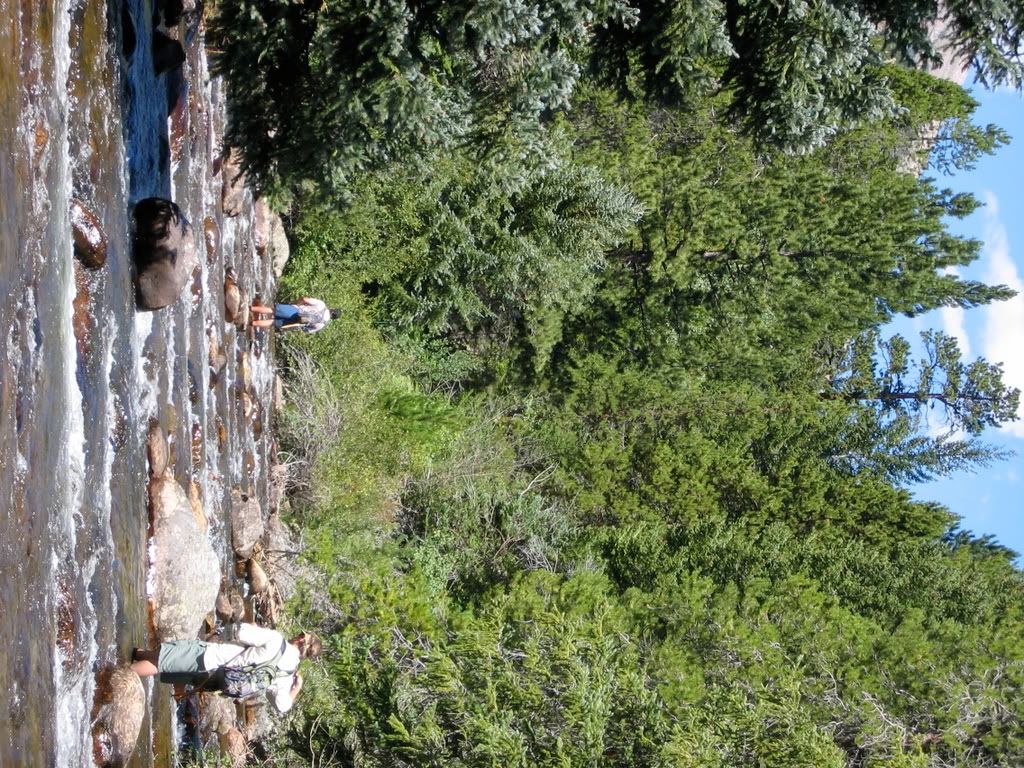
With winter weather affecting much of the US this past week, hope you are finding some time to enjoy the snow as much as these guys:
Aside from braving the chill, going out for a winter walk, sled or ski can be very peaceful, relaxing and fun. Remember to extend the same set of practices as you would on a summer outing - be it picking up after your pet, planning ahead for extreme weather or sticking to designated trails/areas.
If winter is prime season for your outdoor programming, consider incorporating a short talk/discussion on Leave No Trace for the winter. Grant season is upon us as well, check out this program page on our website for updated deadlines, beginning as early as March 1. Grants can be used to purchase educational/teaching resources for Leave No Trace programming: Grants and Scholarships
Stay warm and safe and thank you for practicing responsible recreation!
Over the past 4 years, I've had the good fortune to travel to Hong Kong, Canada, Scotland, Montenegro and Ireland (twice) to offer in-depth Leave No Trace training. While the travel is exciting and it's always great to see and get to know a new place, the best part of it for me is knowing that I'm making a difference for the future. The impacts seen in one country may be very different from the next. Regardless, there are always some impacts and most of which we can do something about. Whether it's learning how to effectively deal with human waste or secure food and trash from wildlife or building less impactful fires, the teaching of new skills is important. More important, however, is instilling an outdoor ethic that will (hopefully) grow over time, increasing peoples connection to the land. People protect what they know and care about, especially if they have the skills to do so. It's been very encouraging to see the Leave No Trace program to take root and grow around the globe. Maybe one day all people, worldwide, who enjoy the outdoors will do so in a responsible way that leaves a legacy to those that come after us.
We’re frequently asked around the Center about the meaning of the Leave No Trace logo. It’s not uncommon to get a least 1 call a week with some reference to the logo. The following are a few of the terms we hear:
With such creative terms for the logo, you can imagine that the explanations of the Leave No Trace emblem get quite original as well. I’ve heard folks incorporate everything from water to space in their meanings of the symbol we’re all so fond of (side note: we know of at least 3 people who have Leave No Trace tattoos!).
I thought it was time to share the Center’s “unofficial” definition of the Leave No Trace logo. Consider the circle in the middle to be a fond outdoor experience or your favorite place to play outside. The surrounding lines represent the ways we interact with that experience or in that space: with enjoyment, wonder, appreciation, and awareness we come into and out of the experience with as little impact as possible.
This is, of course, up for interpretation. Leave us a comment and let us know what the Leave No Trace logo means to you!
In the seven years I've been with the Leave No Trace Center for Outdoor Ethics, I've provided outreach, education and training to thousands of people all across the U.S. and in many countries around the globe. While on the road, I'm constantly reminded of just how many people are supporters or practitioners of Leave No Trace - a great thing. Particularly when you consider that there are hundreds of millions of recreationists who regularly enjoy all the outdoor opportunities this country has to offer.
Last week I had the opportunity to present to a group of forty river rafting company owners and guides in Oregon about Leave No Trace. All were part of the Headwaters Institute, an organization with a mission to provide education that inspires individuals and communities to care for and connect with their watershed. They were all very supportive of Leave No Trace and in many ways, it was like preaching to the choir. This week, I'm at the American Camp Association conference in Tennessee, and again, I'm interacting with people who are supportive of Leave No Trace. Many of the ACA conference participants are deeply involved in the Leave No Trace program and are actively teaching kids about Leave No Trace. Both of these great organizations are partners of Leave No Trace and actively promote outdoor ethics.
What I keep seeing is more and more support for Leave No Trace from all those who enjoy the out of doors. Now more than ever, Leave No Trace is gaining momentum and educating more people than we ever thought possible. Together we can make a significant difference for the responsible use and active stewardship of our shared outdoor resources. It's not what you did yesterday, it's what you're doing tomorrow.
I recently had the pleasure of participating in my first ever winter hut trip. A fairly experienced (in-bounds) telemark skier, I jumped at the invitation of a friend to join a group of experienced backcountry skiers on a backcountry hut trip to the 10th Mountain Hut, part of the 10th Mountain Division Hut Association, near Leadville, CO. Part of the appeal of this trip for me was to escape the comfort and familiarity of resort skiing, but it was mostly about getting outside, pushing myself physically and learning how to travel safely off-piste.
It felt good to be humbled by my lack of experience ... I had never skied with a pack, never used skins, and knew little beyond the basics regarding avalanche safety. My counterparts were patient and willing teachers - instructing me on when to use which wax, how to put on my skins, and other important techniques. However, when it came to the subject of Leave No Trace, I was shocked to learn that my cohorts and I didn't share the same philosophies.
I had (optimistically) assumed that all experienced backcountry users shared the same ethics when it came to leaving our natural areas in the same shape (or better!) as we found them.
After a brief break during our ski in to the hut on the first day, I wondered allowed where to put my apple core - in the outside mesh pocket of my pack or back in my food bag. I was shocked to hear my fellow skier, one of the very "veterans" who had already taught me so much in preceding hours (I'll call him "Joe"), say, "just chuck it in the snow. The animals will appreciate it."
I took several issues with this statement, knowing well that introducing my food waste into the diets of wild animals is never a good idea. However, the hardest part of this verbal exchange was my changing perception of this talented and experienced backcountry skier whom I admire and respect. It's always been challenging for me to stand up to the contrasting opinions of my elders (I blame my Southern upbringing), but in this case, I didn't hesitate to stand my ground and tell Joe that I didn't think it was at all a good idea and proceeded to put my apple core into the side pocket of my pack.
I refrained from preaching, ranting or rattling off the hazards of introducing human food waste into the diets of animals. Instead, I chose to lead by example, which I personally feel is the best way to impact the behavior of others. I have found that the best way to share Leave No Trace outdoor ethics with others is to educate, not regulate.
Being able to see a bear with your own eyes can be one of the most memorable experiences of a wilderness adventure—whether you are John Candy in the "The Great Outdoors" whose character, Chet is hounded and antagonized by the grizzly bear and raccoons that raided his garbage, or you are Chris McCandless (Into the Wild, 1996) out in the Alaskan Wilderness, whose only interaction with living beings was wild animals (Through his writings, we know he encountered a bear), or even better...your best friend is a bear whose name is Baloo, just like Mowgli's is in the movie "The Jungle Book". Bears seem almost human sometimes because of their level of high intelligence and consciousness. We also share similar diets with these species, because they feed off of plants, seeds, berries, and roots. They will also eat insects, fish, and small mammals. Because these animals are so complex and fascinating they only deserve our utmost respect as recreators in the great outdoors. Which allows me to lead into two questions:
Of three learned responses that wildlife may show to recreationists, which is the least desired response? A. Habituation B. Attraction C. Avoidance D. None of these
When hanging food to keep out of reach of wildlife, you should hang the bag? A. 10’ high and 4’ from the tree B. 12’ high and 6’ from the tree C. 14’ high and 8’ from the tree
The first 3 people to respond correctly to these two questions can receive a free Leave No Trace prize in the mail. Arrangements can be made for mailing after reviewing the answers. Have a great day!
Hey all. About to finish re-reading "Into the Wild" before I plan to see the movie. Many of my co-workers and friends have read it and I'd imagine most outdoor enthusiasts have at some point.
Thought this might be an interesting blog discussion as there seems to be varying opinions about this young man's journey and whether was he did was brave and admirable or stupid and foolish.
The crux of the latter argument seems to revolve around the issue of his ill-prepardness and that his inability to secure the necessary gear and information before he set out how to "walk in the wild" actually represented a disrespect for nature and the land in general.






 Posts


