Showing posts with label camping. Show all posts

Friday, January 21, 2011

Newness

Newness is the word to describe the last two weeks as a brand-new staff member with the Center. I’m new to Boulder, Colorado - my family and I just moved from Southern California. I’m new to the depth of knowledge here at the Center - even though I practice the principles as a hiker, camper and trail runner, I still have so much to learn about the science behind the principles.

And I’m new to all of you.

I spent some time today studying the membership survey the Center conducted last year. Since my role as Development Director with the Center is to work with our members, donors and followers, I am eager to learn, who is a Leave No Trace Member? You may be surprised to know that most members live in California (which makes me proud). And the #1 reason that folks are members is the satisfaction that we are furthering our essential role in spreading Leave No Trace.

Aside from the great feeling of supporting the mission, there are great tangible benefits to being a member too. Did you know that the Center’s corporate partners extend their thanks to each member for supporting Leave No Trace? You can get member discounts on Coleman gear, Packit Gourmet (yum) and even a discount on a new Subaru!

Are you a member yet? Take a moment to join or renew your membership. As a member you join me and thousands of others across the world who commit to live Leave No Trace.

Wednesday, May 12, 2010

My Backyard: Responsible Campfire Relay

This past weekend a friend and I explored a new (to us) part of Colorado – North Park.

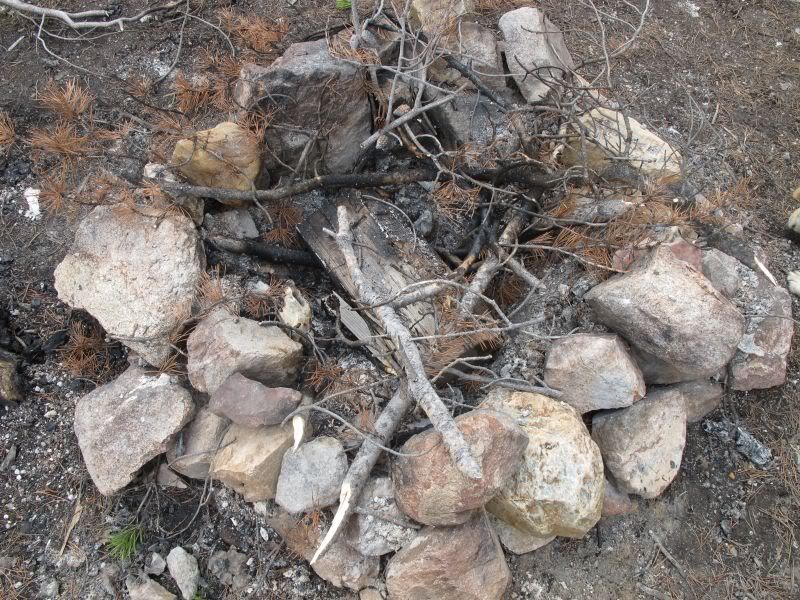
Situated in North Central Colorado, North Park touts many recreational claims to fame including the Moose-viewing capital of Colorado, as well as phenomenal fishing, hunting, camping and backpacking opportunities. The basin opens out northward into Wyoming, in the direction of flow of the North Platte. On the east side, it is rimmed by the Medicine Bow Mountains, the Never Summer Mountains and Rabbit Ears Range to the south, and the Park Range to the west. The continental divide rims the Park along the south and west. The best part of the area is probably the small population of recreationists (compared to many other parts of Colorado’s natural lands) that visit North Parks’ public lands. We did, however, come across this fire pit in the Routt National Forest on our second night of the trip.

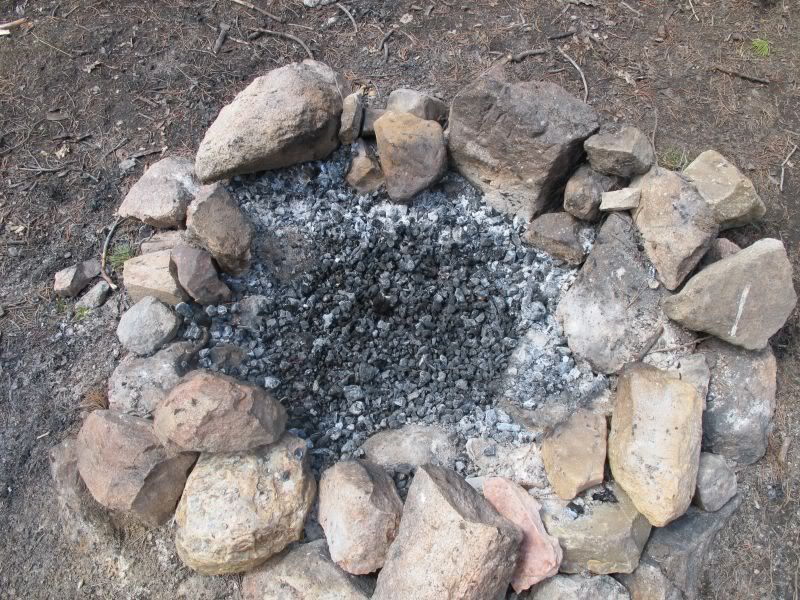
The previous campers had apparently overestimated the amount of firewood needed for their evening enjoyment. After confirming campfires were allowed, we decided that we would have a fire that night. First, we picked out all the aluminum cans, glass bottles and tin foil to pack out in our garbage. Next, we removed the branches and started a small fire with the mission of burning all the existing wood to ash (more information on campfires and campfire alternatives can be found here: http://www.lnt.org/programs/principles_5.php).

Here’s what the next person will find when they camp there:

Which would you rather find on your next camping trip?

Thursday, August 20, 2009

Campfire Challenge!


There is still plenty of time in summer '09 to get outdoors and enjoy a camping trip with family or friends. In considering the Leave No Trace principle Minimize Campfire Impacts, this photo represents a less than leave no trace campsite. Can you identify what could have been done differently to minimize the campfire impacts on this site?
Post your ideas in our comments or email us at kateandtracy@lnt.org and check back on Monday for the results!
Happy Camping...Kate and Tracy

Friday, August 7, 2009

How to Green Your Camping Trip

As much as I hate to admit it, Summer is more than halfway over. It seems that August is a month imbued with the imagery of "reintegration"... probably from 20-odd years of going back to school at this point in the year. Before your summer is over and your own reintegration begins - in to school or just in to the final stretch of the year - challenge yourself to get outside for at least one more excursion.

While you're at it, why not take it back to the basics of good old fashioned camping. In and of itself, camping is a great tradition to carry from year to year as part of your seasonal repertoire because of the ease of access in most parts of the country to good camping areas, and the ability to create a memorable experience that ranges in depth from a frontcountry car camp to a backcountry backpacking trip.

One advantage to an easier camping trip is that it doubles as a fantastic platform for teaching Leave No Trace to your family (and friends, for that matter) in a non-intimidating and hands-on way. Getting your Leave No Trace techniques dialed when you're close to home, and in a somewhat familiar environment, ensures that you'll be that much more of a habit in future outdoor excursions.

Recently, a coworker circulated "Take Only Photographs, Leave Only Catholes," an article that discusses Leave No Trace and camping. The author, Nina Shen Rastogi, touches on a wide array of ways that she was able to integrate Leave No Trace in to her family's recent camping trip, both at the campsite and on the way there.

What are some of the ways that you Leave No Trace when you're camping close to home? How does this help you prepare for trips that are a little further in to the backcountry?

Tuesday, June 30, 2009

The Story of Lost Lake

Good morning!

I wanted to relay a story from this past weekend that I thought we may all relate to and see what you all think...We all wear many different hats - employee, supervisor, parent, spouse, recreationist - and it's alway interesting to see how and when these different parts of our life intertwine.

Last weekend, I went camping at Lost Lake, just outside of the Indian Peaks Wilderness in Colorado. Lost Lake is a very popular hiking and camping spot, only 1.5 miles in from a trailhead that is frequented by people from Denver and Boulder.

There are designated campsites around the lake, but you do not need a permit to camp there; though you do for the surrounding Wilderness area. Our intention was to camp at the lake, but, knowing it was first come -first served, we got a permit anyway, in case we had to hike further up the trail.

Wanting to get an early start, we set off in the morning and were at the lake in plenty of time to have our pick of a few different sites. Good thing we did! As the morning turned into the afternoon, the lake quickly became populated with other hikers and backpackers. Even though the sites filled up, that did not stop the influx of people wanting to camp. The lake contains 9 designated campsites, in my estimation there were 10-12 groups there, a couple that were right next to the water and the trail. In addition, I counted 3 addition fire rings in the woods behind our site, places where others had camped in the past.

Overuse of the resource is clearly an issue at this spot, as there were signs posted everywhere for areas the were being revegetated, a couple of them right along a social trail out to a cool rock outcropping.

This situation reminded me of the Authority of the Resource Technique (ART), which emphasizes the use of "education" instead of "regulation" and using the "voice" of the natural resource (not the authority figure) to promote conservation.

This weekend I was just a person enjoying the outdoors, not necessarily a spokesperson for the Center for Outdoor Ethics. What would you have done in this situation? Have you ever been in a situation where you wanted to say something, but didn't? Or maybe you said something...what the outcome positive or negative? What did you learn?

Thanks for your thoughts! Email me if you want a copy of that article.

Sarah

Monday, April 13, 2009

What does it really cost to take your family camping? A middle of the road solution...


Absolutely the cost of “Staycations” or “Nearcations” are relatively low. For the price of gas money and campground fees, your family can easily spend a week away without destroying what is left of your savings. But what if you don’t already own all the necessary “gear”?

Given my affinity for numbers and camping, I decided to outline what it would cost to outfit a family of four with my family’s camping gear. This only includes the actual camping gear, not the clothes, bikes, fishing poles you likely already own. So, below I have listed the exact camping gear we take. Not the cheapest, nor the most expensive, but in our experience perfect for our family based on cost, durability and comfort.

My list below totals just over $2,200, again this could be done much cheaper or more expensive given your preferences.

Updated 4/14/09 - Thanks for all the comments below, and I apologize if my title was a little misleading. I certainly don't expect every family to shill this out for their first foray into the woods. This kit has taken us 10+ years to pull together, and is merely presented as a quality middle of the road solution. Perhaps a future blog post will present a great budget starter kit...

So here goes the camping list:

  1. Membership to Leave No Trace - $20 or more, your choice
  2. Tent – 4 person, 3 season Big Agnes Big House 4 - $300
  3. Little Kid sleeping bag & pad – $100 + $45 Big Agnes Wolverine Bag and Air Core Pad
  4. Big Kid sleeping bag and pad - $150 + $45 Big Agnes Lulu Petite and Air Core Pad (rectangular)
  5. 2 Adult Sleeping bags - $190 each, REI Radiant 25 degree bag (ok our bags are so old at this point, but if I were to buy new, these are probably what I would get for our typical summer trips)
  6. 2 Adult pads - $150 each, Thermarest Luxury Camp XL (there are many cheaper pads out there, but good sleep goes a long way when camping with the family. Also we are not fans of the bed size air mattresses that many big box retailers carry, we’ve had bad experiences, and judging on the number I see in campground trash bins, others have as well)
  7. Bring your pillows from home - $free
  8. 4 headlamps - $20 - $35 each, Petzl Tikka Plus LED headlamps and Black Diamond Kid’s Wiz
  9. Stove & Gridle - $200, Any Coleman 2 burner propane stove with griddle, also a 5 lb refillable propane tank and conversion hose to avoid using the disposable propane canisters (Leave No Trace members can get great Pro deals on Coleman gear, see #1 above)
  10. Cooler - $50, any 36+ quart, Coleman makes great ones
  11. 4 Camp Chairs – $20 apiece, for relaxing after a day of playing with the family!
  12. Rest of the kitchen - $300, includes aluminum cookset, plates, bowls, mugs and silverware for 4, cutting board and a couple sharp knives, dirty dish bin, sponge and soap, Rubbermaid bin to hold it all, another Rubbermaid to hold all your food, etc. Much of this could be taken from your home, but the ease of grabbing the kitchen bin and putting it in the car make this so worth it for us.

Tuesday, April 7, 2009

Poll Answer: Dirty Dishwater


Thanks to everyone who participated in our most recent poll:

What is the best way to dispose of dirty dishwater while camping?

Over 80% of the participants chose "B: Strain Out Particles and Scatter the Dishwater", which was the correct answer! In our last poll we discussed wildlife habituation, one of the causes being access to human food.

Even the little bits of pasta left in dishwater can be enough to attract wildlife, so straining out those particles (and treating them as trash you'd pack out) is the best practice. You can be creative about straining too; an actual strainer is great, but pantyhose, bandanas and socks have been known to do the trick as well.

Scattering is important because of the element of dispersal. The left over water is sure to carry some food smells, so dispersing it is preferred, as opposed to concentrating it in one place.

A number of poll participants chose A: "Use it to put out your campfire." While the intention is great (always make sure to put out your campfire), again, the concentration of all those food smells in the middle of a campsite will attract wildlife, which starts that process of habituation.

Thanks again for following our blog poll! Stay tuned for another question in the coming weeks.

Tuesday, February 10, 2009

On the road again...


Greetings from Team West, the newest Subaru/Leave No Trace Traveling Trainer Team, Kate Bullock and Tracy Howard. Some of you may recognize us, as we were the 2008 Leave No Trace E-tour team sponsored by Coleman Outdoor Product.

Excitement is in the air as we got this season off to a rip roarin’ start with two very successful events this week. To get us “into the mood,” we mingled with the Camping Singles crew from the Denver, CO area.  The Camping Singles is a group of Colorado single adults who enjoy camping, fishing, hiking, swimming, biking, sightseeing, photography, the camaraderie of others, starry nights around the camp fire, memorable pot lucks, boating, rafting, hot springs, hay rides, etc.

Next stop…Adams State College in Alamosa, CO. Nestled in the San Luis Valley, the Adventure Program welcomed us with open arms. We worked with a group of student and staff leaders that organize outdoor trips. As a Connect Grant recipient, Adams State is working towards providing outreach to local youth serving organizations in southern Colorado. A special thanks goes out to Mick Daniels for his hospitality and efforts to spread awareness of Leave No Trace.

Stay tuned to see where the road takes Team West!

Safe Travels…Kate and Tracy

Monday, January 5, 2009

New Year's Resolution from National Park Service Director


December 24, 2008

New Year's Resolution from NPS Director Mary A. Bomar

WASHINGTON – Out with the old, in with the new—let’s get rid of those tired old New Year's resolutions and do something different—pledge to take a kid to visit a national park!

As Director of the National Park Service, I have spoken across the country of our children being “seduced by the dark side of video games.” That may sound harsh—but it reflects the grim reality that too many kids spend too much time in front of the television, and too little time in healthy outdoor recreation

Across the country, teachers bemoan a lack of knowledge about our nation’s history. As I often point out in my speeches. “More people know Homer Simpson’s hometown than Abraham Lincoln’s.” (Yes, they are both from the town of Springfield.)

As we become an increasingly sedentary society, it is important to set aside time to get up and get moving. A walk through a national park with your child promotes family bonding, a healthy lifestyle, and countless opportunities for discovery.

National parks are the real deal—and places where kids can be hands on. Lat year, we enrolled 565,000 new Junior Rangers after they completed activities at a national park. Just about every national park offers this free program that guides children through site-specific activities. We engaged kids and their families with “bioblitzes,” a quick inventory of all living things in an area. Throughout the country, kids can borrow “discovery backpacks,” visit “exploration stations,” attend ranger programs, or participate in living history demonstrations. We introduced hundreds of thousands to urban archeology at places like Independence National Historical Park in Philadelphia, and told the story of Africans enslaved just a block away from Independence Hall.

We are not against technology—if you can’t beat ‘em, join ‘em! As a visitor, you can hear the Gettysburg Address on your cell phone while visiting the Lincoln Memorial, and hear about President Harry Truman while strolling through his neighborhood in Independence Missouri.

All across the country, park rangers are turning into podcasters. Hundreds of brief audio and video programs are up on park websites, giving visitors a new national park experience. People can learn about park resources, take a guided tour, get help planning trips, and, best of all, meet actual rangers.

We have a website for children at www.nps.gov/kidszone with online games that are both fun AND educational. There are activities about wild animals, caves, soldiers, working dogs, archeology, and much more. Children can create their own ranger station, view webcams, and sample the Junior Ranger program.

I always say that national parks are special places that unite all of us as American. But they can also enlighten, comfort and keep us healthy as well. So do your kids a favor and visit one of the 391 national park sites across this country. Help them discover their America—without a joystick in their hands!

Wednesday, August 6, 2008

What Does the Leave No Trace Logo Mean to You?


We’re frequently asked around the Center about the meaning of the Leave No Trace logo. It’s not uncommon to get a least 1 call a week with some reference to the logo. The following are a few of the terms we hear:

• swirly gig
• pinwheel
• hurricane
• whirlpool
• galaxy

With such creative terms for the logo, you can imagine that the explanations of the Leave No Trace emblem get quite original as well. I’ve heard folks incorporate everything from water to space in their meanings of the symbol we’re all so fond of (side note: we know of at least 3 people who have Leave No Trace tattoos!).

I thought it was time to share the Center’s “unofficial” definition of the Leave No Trace logo. Consider the circle in the middle to be a fond outdoor experience or your favorite place to play outside. The surrounding lines represent the ways we interact with that experience or in that space: with enjoyment, wonder, appreciation, and awareness we come into and out of the experience with as little impact as possible.

This is, of course, up for interpretation. Leave us a comment and let us know what the Leave No Trace logo means to you!

Monday, July 28, 2008

Car Camping in Style


For some it’s the smell of a campfire. For others, it’s sleeping under the stars. And, for others it’s simply being outside for a night. In 2007, more than 60 million people went car camping in the U.S. These people stayed at state parks, private campgrounds, national parks, US Forest Service campgrounds and everywhere in between. For many, car camping is the preferred way to enjoy the out-of-doors.

There are many reasons that car camping is so popular in the U.S. For starters, it’s relatively easy when compared to backpacking–you can take fresh food, coolers, large camp stoves, barbeque grills, hammocks, sun shelters, games, pets, folding camp chairs, etc. Additionally, developed campgrounds generally offer trashcans or dumpsters, bathrooms, washing facilities, picnic tables, flat tent pads and even electricity in some locations. Another reason is that many car camping areas are close to home and easily accessible. Finally, car camping is something that the whole family can enjoy together.

Fortunately, car camping makes it easy to camp in style while minimizing impact. Here are a few things to keep in mind on your next car camping trip for Leaving No Trace:

Know Before You Go – Decide where you want to go–trips close to home are usually easiest. The US Forest Service, Bureau of Land Management, US Fish & Wildlife Service, National Park Service and most state parks offer many car camping opportunities. Some designated campgrounds are very developed (showers, laundry, hot tubs, etc.) and other areas quite primitive (pit toilets, no running water, very few if any amenities, etc.) Visit http://www.reserveamerica.com/ or http://www.recreation.gov to find and reserve a site that meets your needs. Borrow or purchase some basic gear if you don’t already have it: tent, sleeping bag, pad, stove, lantern, etc. Be sure to bring all other items you’ll need to ensure a comfortable stay. Also find out if there are any special regulations for the area or campground you’ll be visiting.

Overnight Right – Many designated campsites offer tent pads or other areas that are well suited for tents. Use these areas. If no designated tent sites exist, put your tent site and kitchen site on the most durable surface available: gravel, bare ground, rock, etc. Consider putting a tarp down in your kitchen area to catch food and trash which can then be easily put into the trash. When traveling around campgrounds, to and from the bathhouse for example, use established paths.

Trash Your Trash – If trashcans are provided, use them. If not, take your trash back home with you so you can dispose of it properly. Burning trash is highly discouraged and burying trash is never in style.

Where’s the Bathroom? – Should your chosen campground have toilet facilities, use them. If not, bury human waste in a small hole 6-8 inches deep at least 200 feet from water sources. Be sure to pick up after your pet too. Use a plastic grocery bag or newspaper bag and toss pet waste in the trash or pack it out.

Leave It As You Find it – Remember that other campers will likely visit your site in the future. Leave the site in a condition that others can enjoy.

Be Careful with Fire – Camp stoves are generally much easier to cook on than fires, and they are safer and create less impact. If you do want to have a fire, make sure it’s permitted and safe. Use existing fire rings and keep your fire small. Remember, a campfire isn’t a trashcan so pack out or throw away your trash. Before gathering any firewood in a campground, make sure it’s allowed.

Keep Wildlife Wild – Securely store all your food when car camping. In many locations this means in your car. Check with rangers or campground host about proper food storage. Remember, feeding wildlife is unhealthy for them and starts bad habits.

Share Our Campgrounds – Be considerate of other campers by adhering to campground rules, keeping your pet under control and by being a good neighbor.

These simple tips will make easy to Leave No Trace of your next car camping adventure.

Wednesday, June 4, 2008

National Get Outdoors Day - Denver, CO (6/14)

Free Event at Sloan’s Lake Park to introduce outdoor recreation opportunities to Denver youth.

On Saturday, June 14th, 2008, dozens of Community Partners, City, County, State, and Federal organizations will be highlighting outdoor recreation opportunities to kids during National Get Outdoors Day from 9:00 a.m. to 2:00 p.m. in Denver’s Sloan’s Lake Park at North Stuart and West 23rd Avenue.

Some of the activities will include:
* Climbing Wall 
* Wildlife Tracking in the sand
* Mountain Biking 
* “How-To” Demonstrations about Camping
* Canoeing 
* A “Ropes” Course
* Fossil Identification 
* “Tent” Raising Competitions
* Coloring Pages 
* Live Animal Displays

At the Junior Ranger Camp, youth can:
Become a Junior Ranger
Learn Map Reading
Explore land, water, and wildlife
Learn Outdoor Safety Skills
Participate in a Scavenger Hunt

Prizes will be awarded for participation in dozens of activities. Coleman Outdoor Products will be providing a complete camping outfit for a family of four as one of the prizes.

The U.S. Forest Service will be conducting Mule Packing demonstrations using their Rocky Mountain Region Specialty Pack String. (Mule Team)

National Get Outdoors Day is designed to get kids out of doors. Participating partners will offer opportunities for urban families to experience all types of outdoor activities. This unique event is designed to excite visitors about public lands and to introduce urban youth to the great outdoors.

Get your summer started and get outdoors by participating in the Denver Get Outdoors Day on Saturday, June 14, 2008 at Sloan’s Lake Park.

You can reach the park by riding the 28 RTD Bus, then use the Quitman Street and West 23rd Avenue stop and walk two blocks west to the event.

For more information visit: www.nationalgetoutdoorsday.org

Contact: For local information, please contact:
Ms. Jasmine Armstrong, Outreach Coordinator, National Park Service, Denver Get Outdoors Day, 303-969-2489 or email at Jasmine_Armstrong@nps.gov

Monday, April 28, 2008

Visiting America's National Parks


Between 1923 and 2007, annual visits to America’s national parks grew from 1.5 million to 275 million. It’s no wonder why–our national parks are truly amazing places! If you’re a well-seasoned park visitor you already know why these places are so special. If you’ve never experienced a national park, don’t wait any longer. The National Park Service manages 56 national parks and an additional 300+ park service units such as national monuments, historic sites, battlefields, wild rivers, long-distance trails and national seashores. With so many options, a little preplanning will go a long way towards ensuring a great visit to one of these treasures.

The best place to start is the National Park Service website: www.NPS.gov. The site allows users to access information about every Park Service unit in the country. The information on the site is organized into four main categories: Parks & Recreation, History & Culture, Nature & Science and Interpretation & Education. Additionally, each Park Service unit has its own website that provides in-depth information, area maps, lists of activities and education programs, and tips on planning your visit. Most national parks have a visitor center that you can call to speak with a ranger about the area. You can also have the Park Service send you maps and other information to help you plan your visit.

There are several things to consider when deciding which national park to visit:
  • What activities are you interested in? Hiking, rafting, camping, fishing, bird watching, auto touring, snowshoeing, horseback What time of year will you be visiting, and what will the weather be like?
  • How much time will you have? One day or a week?
  • Are there entrance fees? If so, how much? 
  • Does the park offer ranger-led activities, hikes and education programs?
  • Where will you stay in the area? 
  • If you plan on camping, do you need reservations or a permit?
  • Are there particular wildlife considerations for the area? 

Planning your visit to a national park is easy and fun. By doing a little research, such as visiting the National Park Service website or calling a visitor center for information, you can be prepared, knowledgeable and ready experience all that our national parks have to offer.

Wednesday, February 13, 2008

Leave No Trace - Now More Than Ever


In the seven years I've been with the Leave No Trace Center for Outdoor Ethics, I've provided outreach, education and training to thousands of people all across the U.S. and in many countries around the globe. While on the road, I'm constantly reminded of just how many people are supporters or practitioners of Leave No Trace - a great thing. Particularly when you consider that there are hundreds of millions of recreationists who regularly enjoy all the outdoor opportunities this country has to offer.

Last week I had the opportunity to present to a group of forty river rafting company owners and guides in Oregon about Leave No Trace. All were part of the Headwaters Institute, an organization with a mission to provide education that inspires individuals and communities to care for and connect with their watershed. They were all very supportive of Leave No Trace and in many ways, it was like preaching to the choir. This week, I'm at the American Camp Association conference in Tennessee, and again, I'm interacting with people who are supportive of Leave No Trace. Many of the ACA conference participants are deeply involved in the Leave No Trace program and are actively teaching kids about Leave No Trace. Both of these great organizations are partners of Leave No Trace and actively promote outdoor ethics.

What I keep seeing is more and more support for Leave No Trace from all those who enjoy the out of doors. Now more than ever, Leave No Trace is gaining momentum and educating more people than we ever thought possible. Together we can make a significant difference for the responsible use and active stewardship of our shared outdoor resources. It's not what you did yesterday, it's what you're doing tomorrow.

Tuesday, November 27, 2007

The 10 Best Undiscovered...


How many times have you seen this headline on a magazine or on the internet, "The 10 Best Undiscovered National Parks, Trails, Campsites, Rivers, Caves, etc."? I just recently ran across another such headline and find it frustrating. It's frustrating because those undiscovered or secret spots that we each know of and have a connection with aren't so secret after all. All it takes is one article in the latest outdoor magazine and on your next visit you can't find a place to park, much less a place to put your tent.

While I am in favor of sharing information about special places and areas of interest, I prefer a little more restraint so that these locations aren't immediately overrun with people. I also realize that new champions for parks, forest and open spaces are cultivated by bringing folks there to experience the area firsthand. However, I feel that it needs to be done in a sustainable way.

What happened to word of mouth 'advertising' for these places? We're in such an age of technology that everything is literally at your fingertips, including information about those hidden, out-of-the-way or off-the-beaten-path places that I thought only I knew about. Reversing this trend is a not a realistic option but educating folks about how to enjoy new areas responsibly is an option. Once again, this is where Leave No Trace comes in. Get out and enjoy but leave the place in such a way that the folks who come after you at least feel like they have discovered something new...

Friday, September 7, 2007

Meet Emily...

Status: Leaves very little trace

Recent trip: Camping at Great Sand Dunes National Park

Favorite outfit during trip: Tutu with optional sun hat

Favorite way to see the dunes: Running, running, running.....

Any Trace?: only very small footprints and many many smiles