Showing posts with label Minimize Campfire Impacts. Show all posts

Sunday, May 6, 2012

Minnesota Summertime

A Minnesota Sunset
While the e-tour rolls into Minnesota and the start of summer there, which can mean only one thing -- flat water canoeing. Canoeing is a great way to enjoy the lakes region of the U.S. and Canada, so if you're packing up and heading out to a chain of lakes this summer, here are a few Leave No Trace tips for your paddling:

  • Wear great boots -- Trails between lakes are, because of the fact that they go between lakes, much more likely to be muddy than usual trails. So make sure you have great boots so you can tromp right through that mud and protect the vegetation and habitat on either side of the trail.
  • Don't crash into shoreline -- Give both the landing and your boat a break by wet-foot portaging. In this technique, you slow the boat and use your feet to stop it before it crashes into rocks and landing, avoiding damaging them and keeping from making that big old crashing sound. Hop out in the water to unload the boat and throw it up on your shoulders for that hike over.
  • Check fire regulations -- Just because your around water doesn't mean you can get careless with your fire building. When you set off on a backcountry paddle, check the current fire regulations before you go and keep them in mind throughout the trek. If you start with a fire ban on your permit, it's a fire ban throughout your trip even if it rains or weather conditions change.
  • Check your boat for invasive species -- Just like it's important to clean your boots before a backpacking trip, if you're moving your boat from one area to another you should check it for invasive species. Check in with boat permitting offices for the most up-to-date information about invasives and stop aquatic hitchhikers!
We're excited to be in Minnesota right at the start of the season and are looking forward to getting some paddling in ourselves! So enjoy the North Woods & Leave No Trace!

Paddle or Portage?

Quinn & Frank

Sunday, April 8, 2012

Klamath Falls Bonanza Blitz

Talking Leave No Trace with the US Forest Service & Fish and Wildlife!

The Leave No Trace e-tour was invited to Klamath Falls, Oregon, for a community-wide Leave No Trace blitz! The results? Awesome. After driving back into winter snow, the week kicked off with events at a couple of the city's elementary schools. In two days, we got to speak to eight different classrooms, making over 200 brand-new Leave No Trace experts! These students were dialed in on what to do with trash when they're hiking, fishing, and hanging out around their beautiful city. Trash Your Trash! We were incredibly impressed with how much some of the youth of Klamath Falls already knew. When talking about how to minimize campfire impacts, one third grader even mentioned that it was important not to build a campfire above the treeline! That's wild!

Rocking Gear from The North Face at Crater Lake National Park!
This part of Oregon, surrounded by the marks of volcanic legacy, has a wealth of National Forests, National Wildlife Refuges, and Crater Lake National Park. We spent a day with some of the top-notch personnel from the US Forest Service and US Fish & Wildlife Service. It was great to talk with them about some of the issues they are dealing with in the area and asked some tough questions of us. Chatting about interactions between different user groups, people making unauthorized markings on trails, and the ever-present human waste issues, we got to cover a lot of territory. Not content to just talk about the backcountry, this group was really focused on how to get this information to the frontcountry users they see throughout the area. Whether supplying outdoor information to new visitors or working backcountry Nordic ski patrol, they want to make sure everyone gets to learn about Leave No Trace!
Quinn teaches Girl Scouts about catholes!
No Leave No Trace blitz is complete without a little trail cleanup, so on Saturday we teamed up with a stellar group of Girl Scouts to help out at a local park. Before we grabbed our trash bags and gloves to put in a little service work, we talked about all seven Leave No Trace principles with a variety of games and demonstrations. One highlight was when the girls were really excited to learn about digging catholes! These young campers are going to be lifelong environmental stewards. After our cleanup, we all enjoyed some smoke-free s'mores -- graham crackers, Nutella, and fluff. An awesome alternative to having a campfire while still enjoying one of the most fun things in the outdoors!

Rogue River Ramblin',

Quinn & Frank

Monday, October 25, 2010

Tree Killing Pest


Photo courtesy of Patricia Douglass, USDA APHIS-PPQ

By now, you’ve probably heard a lot about the issue of invasive plants getting accidentally spread by outdoor equipment like dirty boots. And hopefully, you are aware of the issues surrounding water based invaders- things like zebra mussels- being accidentally brought to new bodies of water on contaminated fishing gear or boats. So I’m guessing you will easily connect the dots when I tell you about another way that outdoor enthusiasts need to minimize the chance that they spread invasive forest pests and diseases- by making sure not to move firewood when you travel.

It seems like a funny thing at first- wouldn’t it be best to bring wood with you to the frontcountry campsite, so you don’t deplete the natural wood on site? And yes, that is one part of minimizing your impacts. But the catch is that supplying your own firewood good idea only if the firewood is from a very local source, or alternatively treated at a high heat (like kiln dried). If the wood isn’t local, you could be bringing in a new tree killing pest- whether a non-native pest (like the emerald ash borer, or Asian longhorned beetle) or even a native pest that simply doesn’t normally occur in that specific location (like mountain pine beetle). And so your actions could end up killing millions of trees.

Firewood isn’t really dead, and it sure isn’t sterile. A cut piece of wood can carry thousands of insect eggs, millions of fungal spores, or even just a single adult insect filled with eggs ready to lay. Just looking at a piece of wood will tell you nothing about if it could start a pest infestation- these things are often invisible to the naked eye. All firewood should be considered potentially contaminated.

So what’s the answer? Like so many aspects of leaving no trace, you have different answers depending on where you are, and what you are doing.

  • If you are reading this, and looking out of your back porch in horror at a pile of wood you collected 200 miles away, burn it soon, burn it completely, and take care to rake up any bark or other debris and burn them too. The carbon you waste and release in this bonfire will be nothing in comparison to the potential millions of acres of dead and dying trees you could cause.
  • Planning your next trip? Are you willing to skip the campfire and go with a campstove? That’s the best option.
  • Can’t bear skipping the campfire and want to plan ahead? Call someone local (ranger station, campground manager) and find out who has locally cut wood in the area for sale. If the wood is local, it isn’t an invasive species threat.
  • If it is legal, and wood is plentiful, consider a smaller fire with only hand gathered wood. Make sure this is a responsible choice given local environmental conditions.
Thanks for reading. You can learn more at dontmovefirewood.org, a website dedicated to reducing the spread of non-native insects and diseases via education about the firewood threat.

Today's blog is brought to you by:

Leigh Greenwood
Coalitions and Networks Manager
The Nature Conservancy,
Forest Health Program
526 East Front Street, Missoula, MT 59802
lgreenwood@tnc.org
(406) 544 - 5099
mountain time zone

Wednesday, May 12, 2010

My Backyard: Responsible Campfire Relay

This past weekend a friend and I explored a new (to us) part of Colorado – North Park.

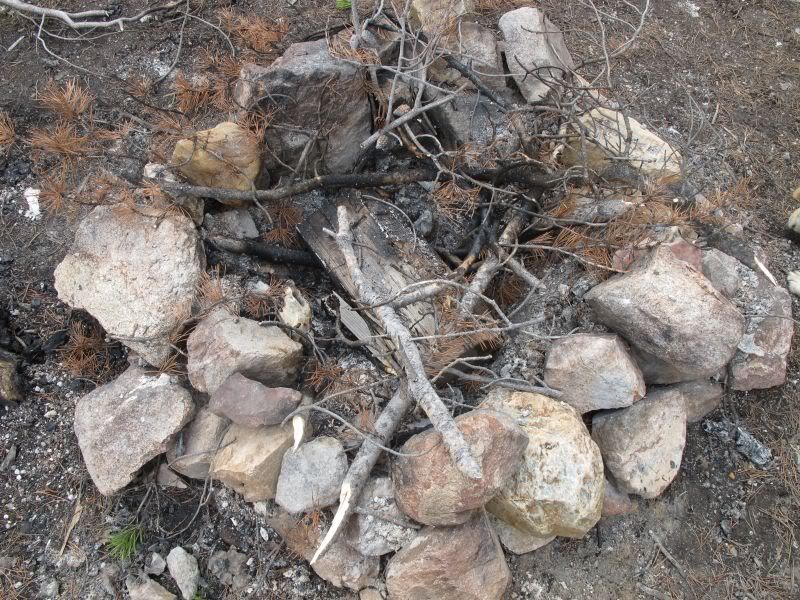
Situated in North Central Colorado, North Park touts many recreational claims to fame including the Moose-viewing capital of Colorado, as well as phenomenal fishing, hunting, camping and backpacking opportunities. The basin opens out northward into Wyoming, in the direction of flow of the North Platte. On the east side, it is rimmed by the Medicine Bow Mountains, the Never Summer Mountains and Rabbit Ears Range to the south, and the Park Range to the west. The continental divide rims the Park along the south and west. The best part of the area is probably the small population of recreationists (compared to many other parts of Colorado’s natural lands) that visit North Parks’ public lands. We did, however, come across this fire pit in the Routt National Forest on our second night of the trip.

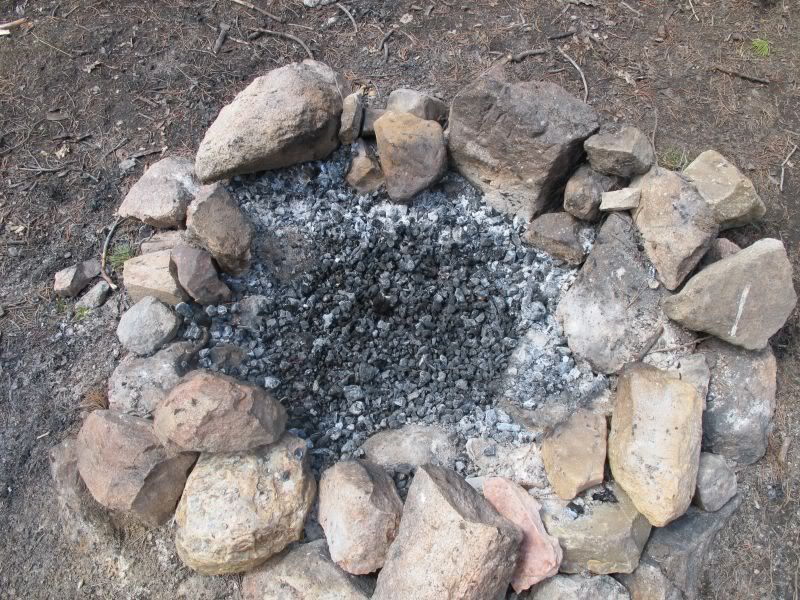
The previous campers had apparently overestimated the amount of firewood needed for their evening enjoyment. After confirming campfires were allowed, we decided that we would have a fire that night. First, we picked out all the aluminum cans, glass bottles and tin foil to pack out in our garbage. Next, we removed the branches and started a small fire with the mission of burning all the existing wood to ash (more information on campfires and campfire alternatives can be found here: http://www.lnt.org/programs/principles_5.php).

Here’s what the next person will find when they camp there:

Which would you rather find on your next camping trip?

Wednesday, April 7, 2010

Montreat College Outreach

Yesterday, we wrapped up our time in North Carolina with a visit to Montreat College. This small school nestled in the Blue Ridge Mountains just outside of Asheville, NC provided a beautiful setting to teach Leave No Trace. Past Traveling Trainers, JD and Emily, visited Montreat College last year and introduced the students to the program. We were asked to educate the students about more of the minimum impact techniques involved with Leave No Trace. In the above photo, Tracy demonstrates a mound fire.


In addition to minimum impact campfire techniques, we also taught the group about proper disposal of human waste in the backcountry. After learning about methods to pack out human waste, we went over the use of a cat hole. This led to an intense round of Cat hole Olympics! The above photo shows Dr. Andrew Bobilya, Co-Chair of the Outdoor Education Department, completing a 6-8" hole for his team. We had a great time working with Montreat students and are looking forward to visiting campus again in the future.
Happy Adventuring...Kate and Tracy

Monday, August 24, 2009

Campfire Results


You've had some time to consider how the picture from Thursday's blog could have had less impact on the environment. Here is a list of what we came up with:

1. Wood collected for burning (in areas where the regulations allow) should have the characteristics of the 4 D's-dead, down, dinky (smaller than your wrist, shorter than your forearm), and distant.
2. Established fire rings should always be used when available.
3. Burn wood to white ash. In front country areas, leave ash in the established fire ring. In back country settings grind small coals to ash between gloved hands, thoroughly soak with water, and scatter remains over a large area away from camp. (Note: In river corridors ashes may have to be packed out)

Here is a second look at the picture that we took this summer along the Diamond Fork River in Utah:

Thanks to Bear Leader and Russell Fruits for taking a second to comment on the impacts they saw in the picture. The school year is right around the corner, but fall weekends provide an amazing venue with crisp, cool nights that are perfect for gathering 'round the campfire. Enjoy these times and remember to Minimize Campfire Impacts as you do so!
Safe travels...Kate and Tracy

Thursday, August 20, 2009

Campfire Challenge!


There is still plenty of time in summer '09 to get outdoors and enjoy a camping trip with family or friends. In considering the Leave No Trace principle Minimize Campfire Impacts, this photo represents a less than leave no trace campsite. Can you identify what could have been done differently to minimize the campfire impacts on this site?
Post your ideas in our comments or email us at kateandtracy@lnt.org and check back on Monday for the results!
Happy Camping...Kate and Tracy

Tuesday, June 23, 2009

Tis the Fire Season


10 days ago at Denver's National Get Outdoors Event, my son was perplexed by Smokey the Bear. Though he was very happy to pose with bulbous, fuzzy Smokey for this photo, he didn't know about Smokey's iconic role spreading the "be careful with fire" gospel. It could be a generational thing — I learned about Smokey in my elementary school. He, however, had never heard of Smokey the Bear even though he has had as comprehensive lecturing as a seven year old can get about the role of fire when you are camping or outdoors.

Though Smokey the Bear didn't say much, it was great to have the opportunity to use him as a launching pad to review the finer points with my son. As a reminder to us all as we sink into the outdoor pleasures of summer:

MINIMIZE CAMPFIRE IMPACTS
-Campfires can cause lasting impacts to the backcountry. Use a lightweight stove for cooking and enjoy a candle lantern for light.
-Where fires are permitted, use established fire rings, fire pans, or mound fires.
-Keep fires small. Only use sticks from the ground that can be broken by hand.
-Burn all wood and coals to ash, put out campfires completely, then scatter cool ashes.

For more detail visit: http://lnt.org/programs/principles_5.php

Friday, May 29, 2009

Photo of the Week: 5/29/09

July 2008, Outreach Manager, Dave Winter demonstrates how to build a mound fire for Texas State Park employees while a local news team films him for a story on Leave No Trace in Texas.